When to Schedule Roof Moss Removal in Lynnwood: Timing Guide
If you live in Lynnwood and you've noticed green fuzz creeping along your north-facing shingles, you're not imagining things — and you're definitely not alone. The Pacific Northwest's mild, wet climate makes Snohomish County one of the most moss-friendly environments for asphalt, cedar, and tile roofs in the country. The question isn't really whether you'll need roof moss removal. It's when to schedule it for the best results.
This guide breaks down the ideal timing window, what the Lynnwood climate does to your roof month by month, and how often you should plan on professional cleanings to protect your investment.
Why Timing Matters More in Lynnwood Than Almost Anywhere Else
Lynnwood averages roughly 150 rainy days a year and sits under heavy tree canopy in neighborhoods like Alderwood Manor, Meadowdale, and the residential streets around Scriber Lake. That combination — persistent moisture, filtered shade, and cool temperatures — is exactly what moss spores need to thrive.
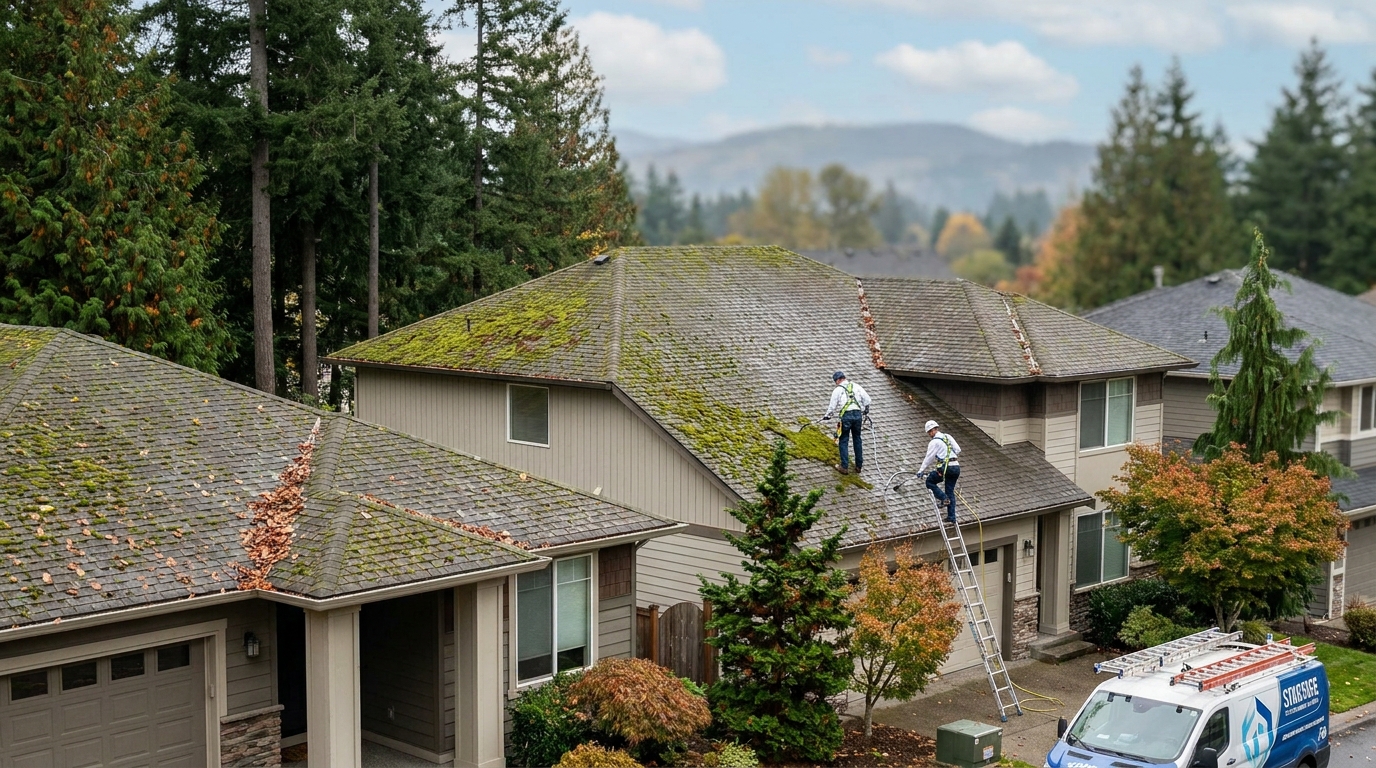
Moss isn't a cosmetic problem. It lifts shingle edges, traps water against the roof deck, and accelerates granule loss. Left alone for two or three winters, it can shave years off a roof that should have lasted decades.
The good news: you have a clear seasonal window to get ahead of it.
The Best Time to Schedule Roof Moss Removal in Lynnwood
Late Spring to Early Fall (May through September)
This is the prime window. Lynnwood's dry season runs roughly mid-May through late September, and that stretch gives you several advantages:
- Dry roof decks are safer to walk and work on. Soft washing and manual moss removal both perform better when shingles aren't saturated.
- Treatments cure properly. Zinc and potassium-based moss treatments need dry conditions to bond and activate.
- You get ahead of fall spore release. Moss reproduces aggressively heading into the wet months. Removing it in summer means fewer spores to overwinter.
- Scheduling is more predictable. Crews aren't fighting rain delays the way they are November through March.
If you can only pick one month, August is often the sweet spot in Lynnwood — dry, warm, and far enough ahead of the October rains to let preventive treatments do their job.
Early Fall (September to mid-October)
This is your second-best window, and it's particularly smart if your roof is shaded by Douglas firs or bigleaf maples — common throughout neighborhoods near Lund's Gulch and the Interurban Trail corridor. A fall cleaning clears summer debris and applies a protective treatment right before the wet season hits.
Winter (November through February): Generally Avoid
Wet, mossy, frost-glazed roofs are genuinely dangerous to work on, and most treatments won't activate in cold, saturated conditions. Emergency situations aside, winter is when you live with what you've got and plan for spring.
How Often Should You Clean Your Roof in Lynnwood?
The national rule of thumb — every two to three years — doesn't quite hold here. In Lynnwood's climate, most homes benefit from:
- A full professional cleaning and moss treatment every 1 to 2 years for homes with significant tree cover or north-facing slopes.
- Every 2 to 3 years for homes in more open lots with southern exposure and minimal overhanging branches.
- Annual zinc treatments as a preventive maintenance step between full cleanings.
If you're seeing visible green growth, dark streaking, or granules collecting in your gutters, you're already past due.
How Long Does Roof Cleaning Last in the Pacific Northwest?
A properly executed soft wash with a follow-up moss inhibitor treatment typically holds up for 18 to 36 months in Lynnwood. The range depends on a handful of local variables:
- Tree coverage: Heavy fir and cedar canopy can cut that lifespan in half.
- Roof pitch: Lower-pitched roofs hold moisture and debris longer.
- Roofing material: Composite asphalt shingles — common across most of Lynnwood's mid-century and newer subdivisions — respond well to soft washing. Cedar shake requires gentler methods and more frequent attention.
- Whether zinc or copper strips are installed at the ridge after cleaning, which dramatically extends the moss-free interval.
At Velocity Cleaning Systems, we typically recommend pairing a thorough cleaning with a preventive treatment plan rather than treating each cleaning as a one-off — it's meaningfully cheaper over a 10-year window.
Is Roof Cleaning Worth It in Lynnwood?
For Pacific Northwest homeowners, the math is straightforward. A full asphalt roof replacement in Snohomish County runs $12,000 to $25,000 or more depending on size and material. Routine moss removal and treatment costs a small fraction of that and can add 5 to 10 years of usable life to a roof that would otherwise be cooked early by moisture damage.
Beyond longevity, there are practical considerations specific to Lynnwood:
- Insurance considerations. Some carriers in Washington have tightened underwriting on roofs showing significant moss or organic growth. Keeping documentation of routine professional cleaning helps.
- HOA standards. Many Lynnwood subdivisions, particularly newer ones near Martha Lake and Alderwood, include maintenance language that covers visible roof condition.
- Resale value. A moss-covered roof is one of the first things buyers and inspectors flag in this market.
Soft Washing vs. Pressure Washing: What Lynnwood Roofs Need
This matters more than most homeowners realize. Pressure washing a composite shingle roof strips granules and voids manufacturer warranties on most asphalt products. The accepted method for residential roofs in this region is soft washing — low-pressure application of treatment solutions that kill moss at the root, followed by gentle rinsing and manual removal where needed.
If a contractor proposes pressure washing your shingle roof, that's a red flag. Ask specifically about soft washing and what treatment chemistry they use.
FAQ: Roof Moss Removal Timing in Lynnwood
Can roof moss removal be done in the rain?
Manual moss removal can technically happen in light rain, but treatment applications need dry conditions to work. Most reputable Lynnwood crews will reschedule for safety and effectiveness.
How long does the actual service take?
Most single-family homes in Lynnwood take 3 to 6 hours for a full clean and treatment, depending on roof size, pitch, and moss volume.
Will the moss come back immediately?
Dead moss continues to release from the roof for several weeks after treatment — that's normal and expected. With a preventive treatment in place, you shouldn't see meaningful new growth for at least 18 months.
Should I clean the gutters at the same time?
Yes. Moss debris, needles, and granules all end up in the gutters during a roof cleaning, so pairing the two services saves a return visit.
Is there a permit required for roof cleaning in Lynnwood?
No — routine cleaning and maintenance don't require permits in the City of Lynnwood. Permits come into play for roof replacement or structural work, not cleaning.
Planning Your Next Cleaning
If your last roof cleaning was more than two years ago, or if you're seeing visible moss heading into summer, the May–September window is when you want to get on a schedule. Homeowners in Lynnwood who want this handled professionally can reach Velocity Cleaning Systems at https://velocitycleaningsystems.com/ for a free estimate and a straightforward assessment of what your roof actually needs — no upsells, no scare tactics, just a practical plan built around the Pacific Northwest climate your roof has to survive.