How to Remove Moss from Your Roof Safely: A Practical Guide for Everett, WA Homeowners
If you've looked up at your roof lately and spotted those telltale green patches creeping across your shingles, you're dealing with one of the most common — and most damaging — problems facing homeowners in Everett, WA. Our wet Puget Sound climate, with damp winters stretching from October through May and shaded lots throughout neighborhoods like Silver Lake, View Ridge, and Bayside, creates conditions where moss thrives year-round.
The problem isn't just cosmetic. Moss lifts shingles, traps moisture against the roof deck, and can shave years off a roof that should last decades. The bigger problem? Most homeowners who try to remove it themselves either damage their roof, hurt themselves, or both.
Here's how to handle roof moss removal the right way.
Why Moss Is Such a Persistent Problem in Everett
Everett sits in one of the wettest microclimates in Washington, receiving roughly 38 inches of annual rainfall and long stretches of overcast humidity. Combined with the Douglas firs and western red cedars that shade so many local roofs, you get the perfect environment for moss spores to germinate and spread.
The composite asphalt shingles common on homes throughout Snohomish County are particularly vulnerable. Moss roots, called rhizoids, work their way under shingle edges, lifting them and creating entry points for water. Once water gets under your shingles during a Pacific Northwest winter, you're looking at decking rot, attic moisture issues, and potentially a full roof replacement years ahead of schedule.
This is why moss removal in Everett isn't an optional maintenance task — it's preventive structural care.
The Risks of DIY Roof Moss Removal
Before we get into technique, you should understand what you're up against:
- Falls are the leading hazard. Wet, moss-covered roofs are essentially slip-and-slides. Washington State L&I data consistently ranks falls from elevation among the top causes of serious home-related injuries.
- Shingle damage from pressure washing. High-pressure water strips the protective granules off asphalt shingles, which is why roofing manufacturers like GAF and Owens Corning explicitly void warranties for pressure-washed roofs.
- Chemical runoff issues. Everett's stormwater drains feed into Port Gardner Bay and the Snohomish River estuary. Improper chemical use can violate local environmental regulations enforced by the City of Everett Public Works Department.
- Incomplete removal. Scraping visible moss without killing the spores guarantees regrowth within 6–12 months.
Safe Moss Removal Methods That Actually Work
1. Soft Washing (The Industry Standard)
Soft washing uses low-pressure application — typically under 500 PSI compared to the 3,000+ PSI of pressure washing — combined with a controlled application of sodium hypochlorite or specialized moss-killing solutions. This kills moss at the root without damaging shingles.
This is the approach reputable roof cleaning companies like Velocity Cleaning Systems use because it preserves the integrity of the roofing material while delivering complete moss kill, not just surface removal.
2. Zinc or Copper Sulfate Treatments
After moss is killed and removed, applying a zinc-based treatment creates a long-term preventive barrier. Rainwater carries trace zinc ions down the roof, inhibiting new moss growth for 2–3 years. Zinc strips installed along the ridge cap offer a passive, longer-term solution.
3. Manual Brushing (After Treatment)
Once moss is dead — typically 48 to 72 hours after treatment — it can be gently brushed off using a soft-bristle brush, working downward with the shingle grain. Never brush upward; you'll lift the shingles and tear the underlayment.
4. Dry Removal Before Wet Season
The window between late August and early October is the sweet spot for moss removal in Everett. The roof is dry enough to walk safely, temperatures are moderate, and the treatment has time to work before the heavy fall rains arrive.
Step-by-Step: The Safer DIY Approach
If you're committed to handling it yourself on a single-story home with a low-pitch roof, here's the safer playbook:
- Choose a dry, overcast day. Direct sun evaporates treatment solutions too quickly; rain washes them off before they work.
- Use proper fall protection. A roof harness anchored to a structural point is non-negotiable. Ladder stabilizers prevent side-slip.
- Apply a roof-safe moss killer. Look for products labeled for asphalt shingle use. Avoid acidic cleaners and never mix bleach with ammonia-based products.
- Let it sit. Most treatments need 20 minutes to several days, depending on the formula.
- Rinse with low pressure or let rain handle it. Garden hose pressure is sufficient.
- Brush gently downward once moss is dead and brittle.
- Install zinc strips at the ridge to slow regrowth.
If your roof has a pitch steeper than 6:12, is two stories or higher, or shows signs of existing damage, stop. The risk-to-reward math doesn't work in your favor.
When to Call a Professional
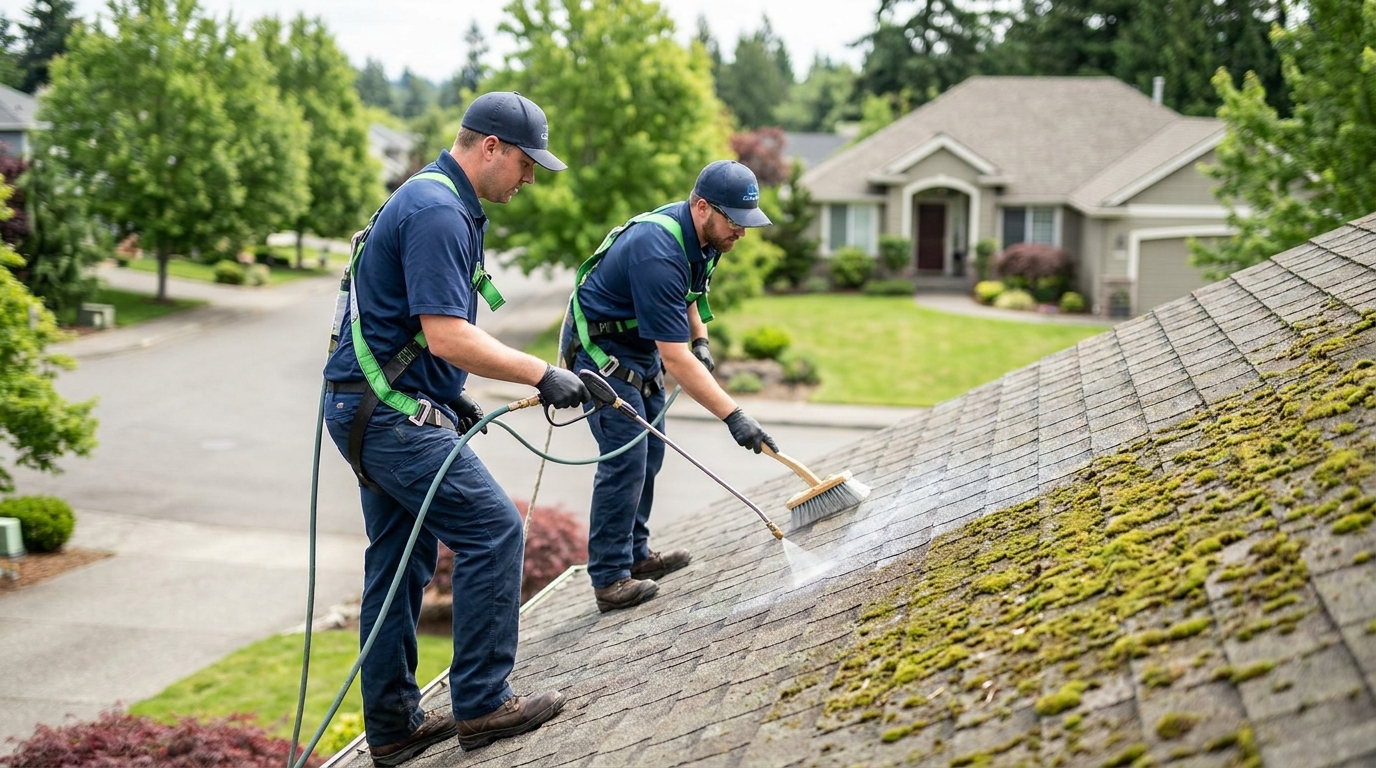
Roof cleaning safety is the single biggest reason most Everett homeowners eventually outsource this job. Professional crews bring:
- OSHA-compliant fall protection systems
- Insurance that covers worker injury and property damage
- Soft-wash equipment calibrated for asphalt, cedar shake, and composite roofs
- Knowledge of which treatments comply with Snohomish County stormwater regulations
- Experience identifying underlying damage — lifted flashing, deteriorated boots, exposed nail heads — that DIY cleaners typically miss
A professional moss treatment typically costs a fraction of even minor roof repair, and a small fraction of premature roof replacement.
How Often Should Everett Roofs Be Treated?
Given local climate conditions, most homes in Everett benefit from:
- Annual inspection — ideally in late summer
- Full moss treatment every 2–3 years for shaded or north-facing roofs
- Zinc strip installation as a long-term preventive measure
- Gutter cleaning at the same time, since moss debris clogs downspouts and contributes to fascia rot
Frequently Asked Questions
Can I pressure wash moss off my roof?
No. Pressure washing strips the granules that protect asphalt shingles from UV damage and voids most manufacturer warranties. Soft washing is the correct method.
Will bleach damage my roof or plants?
Diluted sodium hypochlorite applied correctly is safe for shingles, but it can damage landscaping if not properly rinsed or pre-wetted. This is one reason professional application matters — proper plant protection protocols make a real difference.
How long does professional moss removal take?
For an average Everett home, a soft-wash moss treatment takes 2–4 hours. Full kill and natural shedding of dead moss continues over the following weeks.
Does homeowners insurance cover moss damage?
Generally no. Most policies classify moss damage as a maintenance issue, not a covered peril. This makes prevention significantly more cost-effective than waiting for damage.
Is moss removal worth it before selling a home?
Absolutely. Roof condition is one of the first things home inspectors flag in Snohomish County real estate transactions, and visible moss can knock thousands off perceived value during a walkthrough.
The Bottom Line
Moss removal isn't complicated in principle — kill the moss, let it dry, brush it off, prevent regrowth — but the execution involves real safety risks and real consequences for getting it wrong. For single-story homes with gentle pitches and dry conditions, a careful DIY approach can work. For anything more complex, the cost of professional service is dramatically lower than the cost of a fall, a damaged roof, or a premature replacement.
Homeowners in Everett, WA who want this handled professionally can reach Velocity Cleaning Systems at https://velocitycleaningsystems.com/ for a free estimate. Our team works on roofs throughout Snohomish County and uses soft-wash methods designed to preserve your shingles while delivering complete moss kill — the approach we'd recommend regardless of who you hire.