Roof Cleaning in Everett: When Moss Becomes a Structural Risk
Roof Cleaning in Everett: When Moss Becomes a Structural Risk
Most Everett homeowners notice the moss. The thick, green carpet spreading across the north-facing slope. The dark streaks trailing down from the ridge. They make a mental note. Then another. Then life gets busy, and the roof stays the way it is.
That pattern is understandable. Moss looks like a cosmetic issue. It isn't. What starts as surface growth can compromise your roofing materials, trap moisture against your decking, and quietly accelerate the kind of deterioration that turns a $400 cleaning into a $12,000 roof replacement. In the Pacific Northwest climate, Everett's specific combination of rainfall, shade, and humidity makes this progression faster than most homeowners expect.
This article explains how that damage actually happens, what professional roof cleaning addresses, and how to evaluate whether your roof is at that tipping point.
Why Everett's Climate Creates a Moss Problem Unlike Most U.S. Cities
Everett sits in one of the most moss-friendly climates in the country. Annual rainfall consistently exceeds 35 inches. The city's tree canopy is dense in many neighborhoods, and homes on the west-facing slopes see limited direct sun from October through April. Those conditions create exactly what moss needs: persistent moisture, low UV exposure, and surfaces that stay damp long after rain stops.
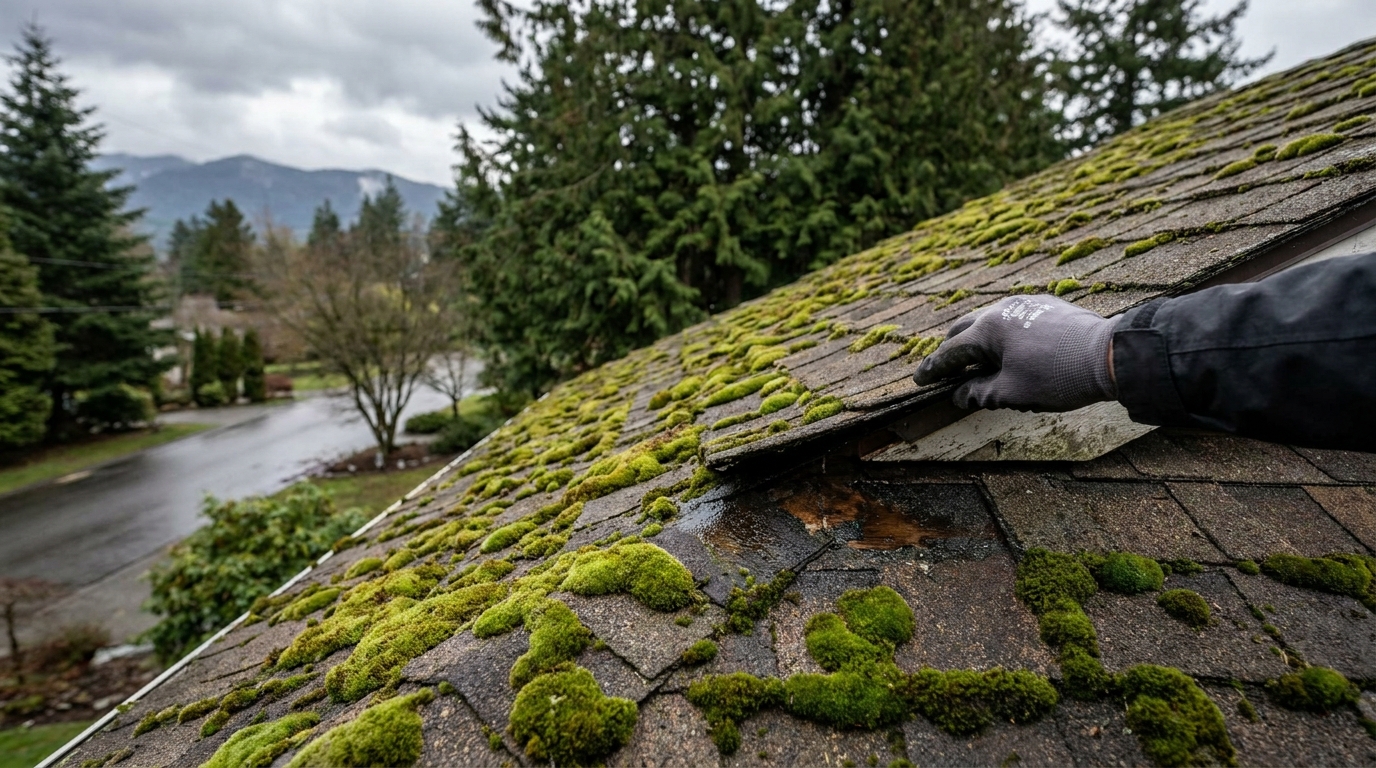
Asphalt shingles are particularly vulnerable. The granules embedded in shingles provide grip for moss rhizoids — the root-like structures moss uses to anchor itself. Once established, those rhizoids physically work into the shingle surface. They don't just sit on top. They penetrate.
Algae (typically Gloeocapsa magma) operates differently. It spreads as dark black or gray streaks and feeds on the limestone filler in asphalt shingles. It doesn't penetrate the way moss does, but it degrades the shingle surface, reduces reflectivity, and creates the ideal damp microenvironment for moss to follow.
In Everett, you rarely see one without the other.
What Moss Actually Does to Your Roof Over Time
Moisture Retention and Shingle Degradation
Moss holds water like a sponge. A thick moss colony on your roof isn't just heavy — it keeps your shingles perpetually wet, including during periods when they'd otherwise dry out. Prolonged moisture contact accelerates the granule loss that asphalt shingles are engineered to resist, but only within normal exposure limits.
As granule loss accelerates, UV protection diminishes. Shingles become brittle. Their rated service life shortens measurably.
Rhizoid Penetration and Lifted Shingles
This is where moss transitions from nuisance to structural risk. As moss colonies mature and expand, the rhizoids applying downward pressure can lift shingle edges — especially on older roofs where the adhesive strip has weakened. Lifted shingles allow wind and water intrusion. In winter, water that enters beneath a lifted shingle freezes, expands, and widens the gap further.
Everett sees enough freeze-thaw cycles each winter to make this a legitimate concern. Experts at Velocity Cleaning Services have observed this pattern repeatedly on roofs throughout the area — shingles that appeared intact from the ground but showed clear rhizoid penetration and moisture intrusion on closer inspection.
Decking and Structural Moisture Damage
When moisture consistently reaches the decking beneath your shingles, you're looking at a different category of problem. Rot in roof decking requires board replacement, not just cleaning or re-shingling. That cost escalates quickly. It also creates conditions for mold growth in your attic space — a separate remediation issue entirely.
The structural threshold isn't dramatic. It doesn't announce itself. It's a quiet accumulation of seasons of trapped moisture doing incremental damage that only becomes visible when repair becomes unavoidable.
Professional Roof Cleaning: What It Actually Involves
There's a meaningful difference between a surface rinse and actual moss and algae removal. Understanding that difference matters when evaluating any roof cleaning service in Everett.
Soft Washing vs. Pressure Washing
High-pressure washing on asphalt shingles causes direct harm. It strips granules, voids manufacturer warranties on some shingle products, and can force water beneath shingles. It's fast and visually satisfying, but it shortens the roof's service life.
Soft washing uses low-pressure application of biocidal solutions — typically sodium hypochlorite-based treatments — to kill moss, algae, and lichen at the root level. The treatment doesn't just remove what's visible; it eliminates the biological infrastructure that would allow regrowth within months. This is the industry-standard approach for asphalt shingles and is the method used by Velocity Cleaning Services for residential roofs in Everett.
What a Quality Treatment Includes
A thorough roof cleaning service should include pre-treatment inspection, appropriate biocidal application, targeted manual removal of heavy moss colonies where needed, and post-treatment guidance on how long the biological kill cycle takes to complete (typically 2–6 weeks for full die-off and natural rinsing).
It should also include gutter clearing if debris buildup is contributing to moisture retention, and an honest assessment of any shingle condition issues worth monitoring.
How to Assess Your Everett Roof's Current Condition
You don't need to get on the roof to do a first-pass assessment. From the ground, with a pair of binoculars if needed, look for:
- Green or brown moss colonies — particularly on north-facing slopes and beneath tree canopy
- Dark streaking — black or gray discoloration running vertically down shingles (algae)
- Lifted or curling shingle edges — especially along ridgelines and at lower courses
- Granule accumulation in gutters — a sign of accelerated shingle degradation
- Lichen growth — flat, crusty gray-green patches that are harder to remove than moss and indicate longer-term colonization
Any combination of these signs warrants a professional inspection. Lichen in particular is a reliable indicator that biological colonization has been progressing for multiple seasons.
Roof Cleaning Cost vs. Replacement Cost in 2026
The financial case for maintenance is straightforward. As of 2026, professional roof cleaning in the Everett area typically runs in the range of $300–$600 for an average residential roof, depending on pitch, size, and extent of biological growth. Full asphalt shingle roof replacement for a standard Everett home ranges from $9,000 to $18,000 or more, depending on materials and decking condition.
Even accounting for cleaning every two to three years, the maintenance path costs a fraction of early replacement. And more practically: a well-maintained roof that reaches its full 25–30 year service life is a fundamentally different financial outcome than one that fails at year 14 because biological damage was left to accumulate.
Frequently Asked Questions: Roof Cleaning in Everett
How often should I have my roof cleaned in Everett?
Given Everett's rainfall and shade conditions, most residential roofs benefit from professional cleaning every 2–3 years. Homes with significant tree coverage over the roof may need attention closer to every 2 years. After a soft wash treatment, biocidal residue continues working for months, which extends the effective protection window.
Will roof cleaning void my shingle warranty?
Pressure washing typically does void shingle warranties. Soft washing with appropriately diluted biocidal solutions generally does not — but if your roof is under an active manufacturer warranty, verify the treatment method with your contractor before work begins. Reputable providers like Velocity Cleaning Services will confirm this upfront.
Is the cleaning solution safe for landscaping?
Sodium hypochlorite-based solutions can harm plants if applied without precautions. Professional crews should pre-wet surrounding vegetation, use containment methods where appropriate, and rinse landscaping after treatment. Ask any contractor how they protect your property before agreeing to service.
Can I just treat the moss myself?
DIY zinc strip products and retail moss treatments do exist and can provide limited preventive benefit. They're generally less effective at addressing established colonies and carry real fall risk for homeowners without proper equipment and training. For roofs with visible moss coverage or any signs of shingle lifting, professional service is the appropriate response.
How long after cleaning before I see results?
Soft wash treatments kill biological growth, but the dead material rinses away gradually over 4–8 weeks of normal rainfall. The roof may not look dramatically different immediately after treatment. This is normal and expected — it's not a sign the treatment didn't work.
The Maintenance Window Closes Quietly
Roof cleaning is one of those maintenance categories where the window for cost-effective intervention is real but not obvious. A roof that's cleanable today may need partial re-decking in three years if moisture intrusion is already occurring. The biological growth visible from your driveway is the surface signal of a process that's been underway longer than it looks.
In Everett's climate, this isn't alarmism — it's the pattern professionals in this industry see regularly. The Pacific Northwest doesn't give roofing materials an easy environment, and maintenance timelines that might be appropriate in drier climates compress here.
Homeowners in Everett who want this assessed and handled professionally can reach Velocity Cleaning Services at velocitycleaningsystems.com for a free estimate. They work specifically in the Everett area and use soft wash methods appropriate for the residential roofing materials common in this region.