Spring Pressure Washing Checklist: Seasonal Exterior Maintenance for Everett Homes
After another long, damp winter in Everett, your home's exterior has taken a beating. Months of marine-layer moisture, evergreen debris, and that fine grey film that settles on everything west of the Cascades have left siding, decks, and walkways looking tired. Spring is when you reset.
This checklist walks you through what actually needs attention, in what order, and why timing matters in a climate where mildew and algae start growing again the moment temperatures climb above 50°F.
Why Spring Pressure Washing Matters in Everett
Everett sits in one of the wettest microclimates in Snohomish County. The combination of Puget Sound humidity, prevailing southwesterly winds carrying salt air off Possession Sound, and the dense tree canopy in neighborhoods like Bayside, Riverside, and View Ridge creates ideal conditions for biological growth.
By April, you're typically looking at green algae on north-facing siding, black streaking on roofs, moss colonies in shaded walkway joints, and a winter's worth of organic debris compacted into gutters and downspouts.
Left alone, these aren't just cosmetic problems. Algae feed on the limestone filler in asphalt shingles. Moss holds moisture against wood siding and trim, accelerating rot. Slick walkways become liability issues. Spring cleaning catches all of it before summer sun bakes the staining into surfaces and makes removal twice as difficult.
The Spring Pressure Washing Checklist
Work from the top of the house down. Anything you clean below a dirty surface will get re-soiled when the upper area is washed.
1. Roof and Gutters
- Inspect for moss colonies, particularly on north and east-facing slopes shaded by Douglas firs and cedars.
- Soft-wash the roof using a low-pressure application — never high-pressure spray on asphalt shingles, which strips granules.
- Clear gutters of needles, seed pods, and the layer of black sediment that accumulates over winter.
- Flush downspouts and confirm water exits at least four feet from the foundation.
2. Siding and Trim
- Wash all four elevations, paying close attention to the north and west sides where mildew sets in fastest.
- Use appropriate pressure for your siding type — vinyl tolerates more force; cedar shake, fiber cement, and engineered wood (LP SmartSide is common in newer Everett construction) require gentler treatment.
- Treat with a surfactant or biocide where mildew is established. Plain water doesn't kill spores; it just relocates them.
- Inspect caulking and trim seals as you go. Winter freeze-thaw cycles in Everett are mild but persistent, and gaps appear where they didn't exist last fall.
3. Windows and Screens
- Remove screens and rinse separately.
- Clean window exteriors and frames before doing interior glass — order matters.
- Check weep holes at the base of vinyl window frames. Blocked weeps cause water intrusion that mimics seal failure.
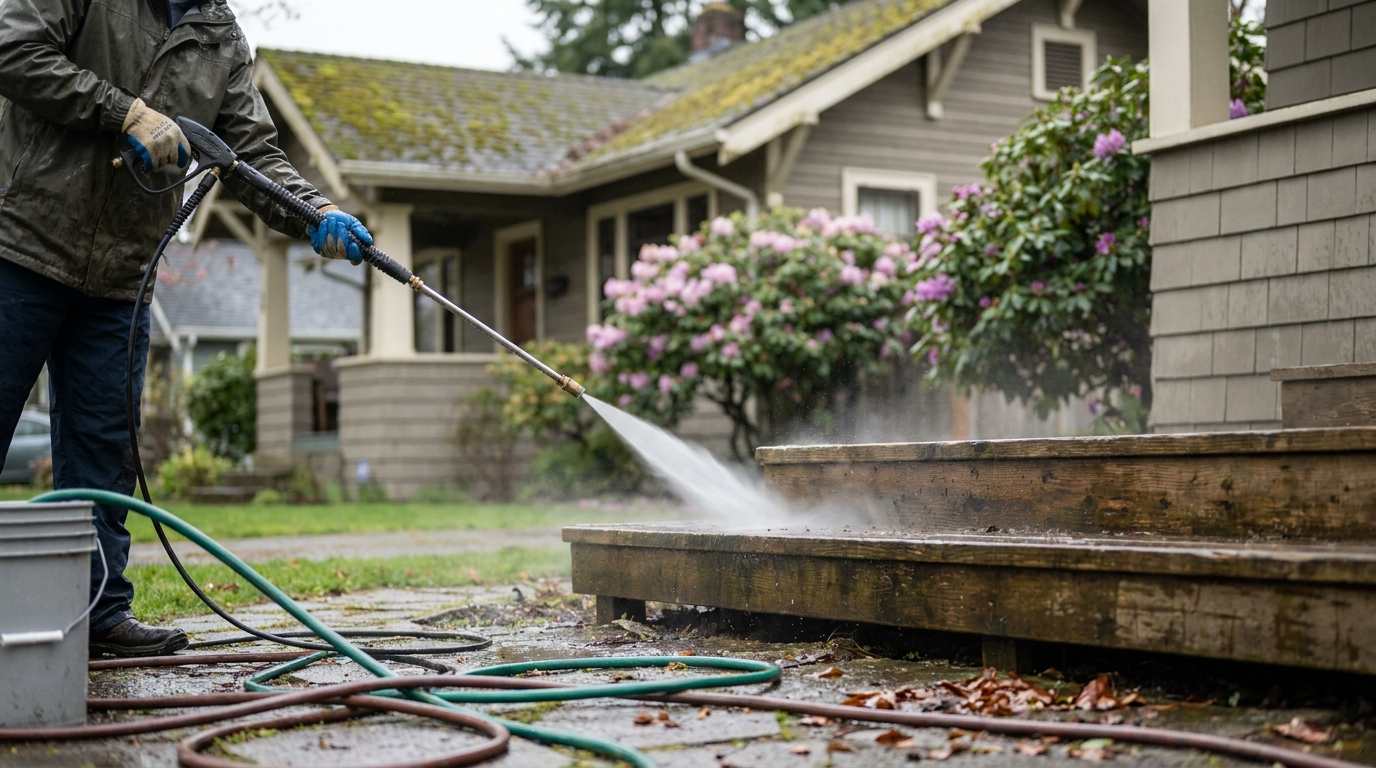
4. Decks, Patios, and Outdoor Living Spaces
- Sweep thoroughly first. Pressure washing over embedded grit grinds it into the wood.
- Wash composite decking with manufacturer-approved pressure (typically under 1,500 PSI).
- For pressure-treated wood and cedar decks, clean and then evaluate whether resealing is needed — Everett's UV exposure, while less intense than eastern Washington, still degrades finishes over a 2-3 year cycle.
- Address moss between deck boards before it lifts the boards from below.
5. Driveways, Walkways, and Concrete
- Pre-treat oil stains with a degreaser. Pressure alone won't lift petroleum products.
- Surface-clean concrete with a rotary attachment for even results — wand-only cleaning leaves visible streaks.
- Pay attention to expansion joints where moss and weeds establish.
- Be mindful of stormwater runoff. The City of Everett's stormwater regulations prohibit discharging wash water containing chemicals or heavy sediment directly into storm drains. Reputable operators capture or divert wash water accordingly.
6. Fences, Outbuildings, and Hardscape
- Wood fences typically need washing every two years in this climate; cedar fences in shaded lots need it annually.
- Clean retaining walls, especially segmental block walls common in hillside lots near Silver Lake and Mill Creek-adjacent neighborhoods, where moss accelerates joint deterioration.
- Don't forget the garage door — often the largest visible surface from the street.
7. Driveway Aprons and Curbside Concrete
- The transition zone where your driveway meets the public sidewalk collects road grime, brake dust, and winter sand.
- A clean apron makes the entire property read as maintained, even before the rest of the work registers visually.
Timing: When to Schedule Spring Cleaning in Everett
The window that works best runs from mid-March through late May. You want overnight temperatures consistently above freezing, daytime temps in the 50s or warmer for proper drying, and ideally a 24-48 hour dry stretch around the work.
Booking earlier in this window has practical advantages. Pollen season — particularly the heavy yellow cedar and fir pollen that coats everything in Everett from late April into June — will re-soil freshly washed surfaces. Many homeowners schedule a primary spring wash in March or early April, then a quick rinse-down in June after pollen settles.
If you missed the spring window entirely, late summer (August through mid-September) is the secondary opportunity before fall rains return.
DIY vs. Professional Pressure Washing
Renting a pressure washer from a local hardware store costs roughly $80-100 per day. For a single-story rambler with a small driveway, that math can work.
Where DIY breaks down: roof cleaning (fall risk and shingle damage), two-story siding (ladder work with a pressurized wand is genuinely dangerous), and any surface where the wrong pressure or chemistry will cause permanent damage. Stripped paint, etched concrete, gouged cedar, and blown-out window seals are common DIY outcomes.
Professional crews like Velocity Cleaning Services use soft-wash systems for delicate surfaces and calibrated pressure for harder ones, along with surfactants that actually kill the biological growth rather than just rinsing it.
Frequently Asked Questions
How often should I pressure wash my Everett home?
Most exteriors benefit from an annual spring cleaning, with concrete and roofs on a 1-2 year cycle depending on tree cover. Heavily shaded properties in places like Forest Park or older Bayside lots often need more frequent attention.
Will pressure washing damage my siding?
Only if pressure, distance, and angle are wrong for the material. Vinyl, fiber cement, brick, and stucco each have different tolerances. Soft-wash methods solve this by using chemistry rather than force.
Is pressure washing environmentally responsible?
It can be. The key is wash-water management and using biodegradable cleaners. Everett's stormwater rules require operators to prevent contaminated runoff from entering storm drains, and professional crews build that into their setup.
How long does a typical spring wash take?
A standard single-family home with driveway, walkways, and siding usually takes a half-day to a full day. Adding roof cleaning, decks, and fencing extends it to one to two days.
What's the difference between pressure washing and soft washing?
Pressure washing relies on water force; soft washing relies on cleaning solutions applied at low pressure. Roofs, painted surfaces, and older wood need soft washing. Concrete, brick, and unpainted hardscape can handle pressure.
Closing Thoughts
Spring exterior maintenance pays back in two ways: your house looks dramatically better immediately, and you head off the structural issues that come from letting biological growth establish for another year. The checklist above covers what actually matters — the rest is execution.
Homeowners in Everett who want this handled professionally can reach Velocity Cleaning Services at https://velocitycleaningsystems.com/ for a free estimate on a full spring exterior package or any individual item on the list above.