Roof Cleaning in Bellevue: Removing Moss and Algae the Safe Way
Roof Cleaning in Bellevue: Removing Moss and Algae the Safe Way
If you've noticed green patches creeping across your shingles or black streaks running down your roof, you're not alone. Moss and algae are among the most common roofing complaints from Bellevue homeowners — and they're more than a cosmetic issue. Left untreated, biological growth can shorten a roof's lifespan by years and quietly invalidate manufacturer warranties.
The good news: roof cleaning is a well-understood process when done correctly. The bad news: done wrong, it can cause more damage than the moss itself. This guide covers what's actually happening to your roof, which removal methods are safe, and what to expect from professional service in Bellevue, WA.
Why Moss and Algae Thrive in Bellevue
Bellevue's climate is genuinely hospitable to biological roof growth. The Pacific Northwest's combination of mild temperatures, frequent rainfall, and tree canopy cover creates near-ideal conditions for moss, algae, and lichen to establish themselves on roofing surfaces.
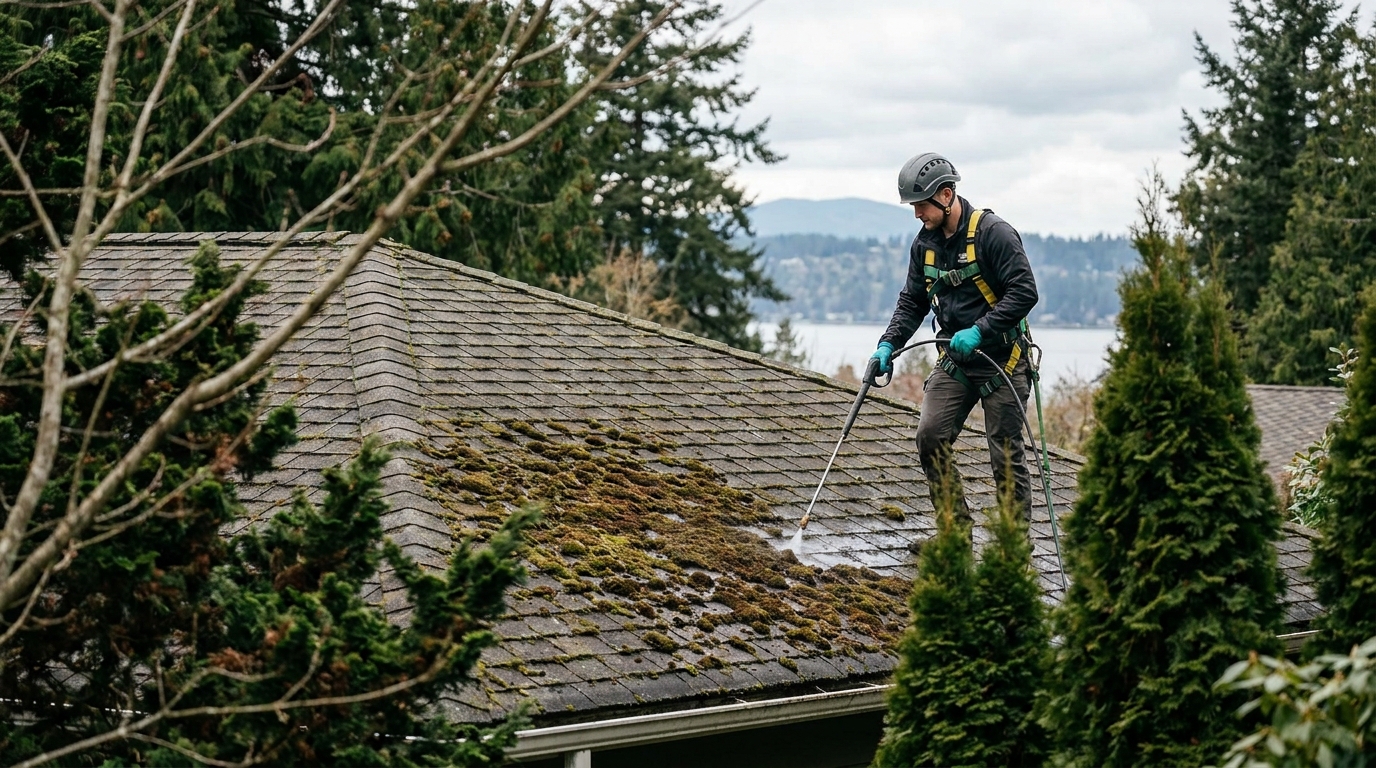
Moss is the most aggressive of the three. It anchors itself into shingles with root-like structures called rhizoids, which physically lift and separate asphalt granules. Over time, this compromises the waterproofing layer underneath. Algae — typically appearing as dark streaking — is a cyanobacterium called Gloeocapsa magma. It feeds on the limestone filler in asphalt shingles and spreads quickly in humid conditions. Lichen combines fungal and algae organisms and is the hardest of the three to remove without professional intervention.
North-facing roof sections and areas shaded by Douglas firs or maples are particularly vulnerable. If you're in a neighborhood with mature tree cover, expect to address this more frequently than the regional average.
The Risk of High-Pressure Washing
The instinct for many homeowners is to rent a pressure washer and blast the growth off. It works — in the sense that it removes what's visible. But high-pressure washing strips granules from asphalt shingles, accelerates wear, and can force water under roofing materials.
Industry guidance from roofing manufacturers is consistent on this point: high-pressure washing voids warranties on most asphalt shingle products. The Asphalt Roofing Manufacturers Association (ARMA) recommends low-pressure washing combined with appropriate cleaning solutions as the standard approach.
This distinction matters when you're evaluating cleaning services. Any provider recommending high-pressure application on asphalt shingles is prioritizing speed over your roof's long-term condition.
Safe Moss and Algae Removal: What the Process Actually Looks Like
Soft Washing
Soft washing is the industry-standard method for moss and algae removal on residential roofs. It uses low water pressure — typically under 100 PSI — combined with a biocidal cleaning solution to kill organic growth at the source.
The solution is applied to the roof surface and allowed to dwell, breaking down the cellular structure of moss, algae, and lichen. Once the biological matter is dead, it can be rinsed away at low pressure without abrasive force. This protects shingles while achieving a thorough clean.
Cleaning Solutions: Sodium Hypochlorite vs. Sodium Percarbonate
Two primary solution types are used in professional roof cleaning. Sodium hypochlorite (a diluted bleach solution) is fast-acting and effective against algae and moss. It's the most commonly used active ingredient in professional applications. Sodium percarbonate is an oxygen-based alternative that's gentler on surrounding vegetation — a relevant consideration in Bellevue's landscaped neighborhoods.
The right choice depends on the severity of growth, the roofing material, and what's directly below the roofline. A professional assessment will factor all three.
Moss Treatment vs. Full Removal
For heavy moss growth, physical removal — carefully done by hand or with soft-bristle tools — often precedes chemical treatment. Attempting to rinse away thick moss without removing the bulk first is inefficient and risks washing debris into gutters and downspouts.
After cleaning, zinc or copper strips installed at the roof ridge act as a long-term preventive measure. Rainwater carries trace metals down the roof surface, creating an inhospitable environment for regrowth. It's not a permanent fix, but it significantly extends the interval between cleanings.
How Often Should Bellevue Roofs Be Cleaned?
In Bellevue's climate, most professionals recommend cleaning asphalt shingle roofs every two to three years. Heavily shaded roofs — or roofs that haven't been treated with preventive zinc or copper strips — may need attention more frequently.
Cedar shake roofs require a different approach and typically need cleaning every one to three years, with specific attention to preserving the wood's natural oils. Metal roofing is the most resistant to biological growth but still benefits from periodic inspection and cleaning of any organic debris accumulation.
The best indicator isn't a fixed schedule — it's what you can see. Visible green patches, dark streaking, or granule accumulation in gutters are all signals to schedule an assessment.
DIY vs. Professional Roof Cleaning in Bellevue
Some homeowners do successfully clean their own roofs. If the pitch is low, the growth is mild, and you're comfortable working at height with proper safety equipment, a DIY approach using a commercially available soft-wash solution is feasible.
That said, the practical barriers are real. Roof work carries meaningful fall risk — it's consistently among the leading causes of serious residential injuries. Mixing and applying cleaning solutions incorrectly can damage shingles, kill surrounding plants, or void warranties. And without the right equipment, soft washing at the appropriate pressure is difficult to achieve.
Professional roof cleaning services in Bellevue, WA, bring the right chemistry, equipment, and liability coverage for the job. Velocity Cleaning Systems, for example, approaches roof cleaning with a focus on material-appropriate methods — soft washing for asphalt and composition roofs, adjusted techniques for cedar and metal — along with pre-treatment of landscaping to protect vegetation during the cleaning process. Customers reflect this in their feedback: one reviewer noted that the team was "extremely courteous and professional" during a roof de-mossing job, while another described results as simply "incredible" across multiple services. Velocity currently holds a 4.9-star rating across 21 Google reviews.
What Does Roof Cleaning Cost in Bellevue?
As of 2026, professional roof cleaning in Bellevue generally runs between $350 and $800 for a standard single-family home, depending on roof size, pitch, and the severity of growth. Heavily affected roofs or those requiring significant physical moss removal before soft washing will fall toward the higher end.
That figure is considerably less than premature shingle replacement, which typically runs $8,000 to $20,000 or more depending on the roofing system. Routine cleaning is straightforward preventive maintenance, not an optional upgrade.
Frequently Asked Questions: Roof Cleaning in Bellevue
Will roof cleaning damage my shingles?
Soft washing — the correct method for asphalt shingles — does not damage shingles when applied properly. High-pressure washing does cause damage and is not recommended for standard residential roofing materials. Always confirm the method before hiring.
How long does roof cleaning take?
Most residential roof cleanings in Bellevue are completed in two to four hours. Larger roofs, steep pitches, or heavy growth can extend that timeline. Some soft-wash treatments are designed to be left on and rinsed by rain over subsequent weeks, which affects the on-site time estimate.
Is roof cleaning safe for my gutters and landscaping?
A professional service will wet down and protect surrounding vegetation before applying any chemical solution. Gutters should be inspected and cleared after cleaning, since dislodged debris will accumulate there during the rinse process.
Does moss grow back after cleaning?
Yes — biological growth will return, especially in Bellevue's climate. The regrowth timeline depends on shade exposure, roof material, and whether preventive treatments like zinc strips were applied. Most homeowners on a routine maintenance schedule see significantly slower regrowth between cleanings.
Can I clean my roof myself?
It's possible on low-pitch roofs with the right safety precautions and correct cleaning products. For steep-pitch roofs, significant growth, or homeowners without experience working at height, professional service is the safer and more reliable option.
Does homeowners insurance cover moss damage?
Generally, no. Moss and algae damage is typically classified as a maintenance issue rather than a covered peril. Insurance policies across most carriers treat biological growth as a preventable condition — which is another reason routine cleaning matters.
How do I know if my roof needs cleaning now or can wait another season?
If you can see visible green or black patches from the ground, moss is already lifting granules and cleaning should not be deferred. If growth is minimal and the roof was last cleaned within two years, a brief wait is reasonable. The practical rule: when in doubt, schedule a professional assessment — most Bellevue providers offer free estimates, and an inspection costs nothing compared to accelerated shingle wear.
Will roof cleaning affect my solar panels?
Experienced professionals work around solar panels during roof cleaning and typically pre-rinse the panel surfaces before applying any chemical solution. Always disclose panel locations when requesting a quote. Cleaning the surrounding roof area actually benefits panels by reducing debris and biological growth that can creep toward panel edges and mounting hardware over time.
Conclusion: Getting This Right in Bellevue
Moss and algae removal isn't complicated — but it does require the right method, the right chemistry, and an honest understanding of what your roof is made of. The soft-wash approach, applied correctly, extends roof life, protects your warranty, and keeps your home looking clean without the risk that comes from pressure washing.
For Bellevue homeowners who want this handled professionally, Velocity Cleaning Systems offers roof cleaning with a clear emphasis on material-appropriate technique and protecting surrounding landscaping. You can reach them at velocitycleaningsystems.com to request a free estimate and get a clear picture of what your roof actually needs.