How Often Should You Pressure Wash Your House in Lynnwood?
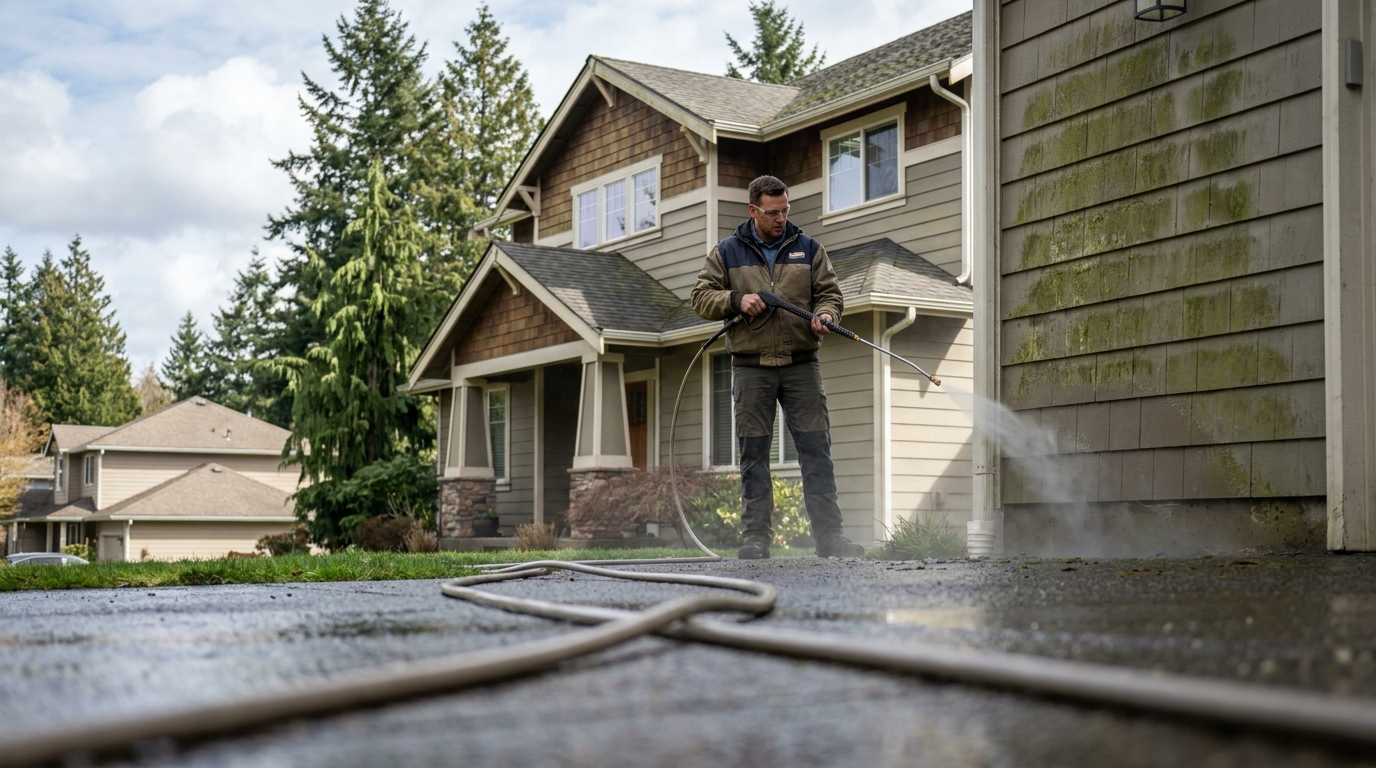
If you've looked up at your siding lately and noticed green streaks, dark patches near the gutters, or a chalky film along the north-facing walls, you're not imagining things. Lynnwood's climate is one of the most aggressive in the country when it comes to growing biological grime on a house — and that affects how often you should be cleaning it.
The short answer: most Lynnwood homes benefit from a professional exterior wash every 12 to 18 months. But the right cadence depends on your siding material, tree cover, sun exposure, and what part of town you live in. Here's how to think about it.
Why Lynnwood Homes Need More Frequent Washing Than the National Average
National guidance often says pressure wash your house every two to three years. That advice is written for drier climates. Lynnwood sits in a temperate rainforest zone — we average roughly 40+ inches of rain per year, with damp, mild conditions from October through May.
That moisture, combined with the heavy tree canopy across neighborhoods like Martha Lake, Alderwood Manor, and the areas near Scriber Lake, creates ideal conditions for algae, moss, mildew, and lichen. North- and east-facing walls that get less afternoon sun stay damp longer and grow biological staining the fastest.
If you're comparing your house to one in Phoenix or Denver, you're not comparing apples to apples. A Lynnwood home accumulates organic growth two to three times faster than homes in arid climates.
How Often Should You Pressure Wash Your House in Lynnwood?
Here's a realistic schedule based on what we see across Snohomish County:
- Every 12 months: Homes with heavy tree cover, north-facing walls with visible green growth, properties near wooded areas like the trails around Lund's Gulch, or homes with cedar, LP SmartSide, or painted wood siding.
- Every 18 months: Most vinyl-sided homes in open neighborhoods like parts of Lynnwood's eastside near Alderwood Mall, where there's more sun exposure and less canopy.
- Every 24 months: Brick or stone-clad homes in well-drained, sunny lots — though gutters, soffits, and concrete around these homes usually still need annual attention.
- Spot cleaning as needed: Concrete driveways, walkways, and patios often need a refresh every 12 months regardless of the rest of the house, especially heading into spring.
The ideal window for a full house wash in our area is late spring through early fall — typically May through September — when surfaces dry properly and the wet season has paused long enough to make the results last.
Pressure Washing vs. Power Washing: Which Does Your House Actually Need?
People use these terms interchangeably, but they're not the same thing — and the difference matters a lot for Pacific Northwest homes.
Pressure Washing
Uses high-pressure water at ambient temperature. It's effective for hard surfaces like concrete driveways, brick walkways, and stone patios where you need to dislodge embedded dirt.
Power Washing
Uses heated water under pressure. The heat helps break down grease, oil, gum, and certain biological growth more effectively. It's often used for commercial applications or particularly stubborn driveway stains.
Soft Washing
This is what most Lynnwood houses actually need. Soft washing uses low pressure (under 500 PSI, often closer to garden-hose pressure) combined with biodegradable cleaning solutions that kill algae, moss, and mildew at the root. High-pressure water on vinyl siding, cedar shakes, or painted wood can force water behind the siding, damage seals, strip paint, and void manufacturer warranties.
At Velocity Cleaning Systems, we use soft washing for siding, fascia, and soffits, and reserve true pressure washing for concrete, pavers, and other hard surfaces that can take it. Matching the method to the surface is the single biggest factor in whether a wash actually helps your house or quietly damages it.
Is Pressure Washing Worth It for Lynnwood Homeowners?
For most homeowners here, yes — and the math is straightforward.
Untreated algae and moss don't just look bad. They hold moisture against your siding, accelerate paint failure, eat into cedar, work under shingles on the roof, and clog gutters. The cost of replacing a section of rotted trim, repainting prematurely, or replacing a moss-damaged roof runs into the thousands. A routine exterior cleaning runs a small fraction of that.
There's also the curb appeal factor, which matters if you're planning to sell. Real estate agents across Snohomish County will tell you a clean exterior is one of the highest-ROI prep items before listing.
The cases where it's not worth it: very new homes (under two years) with no visible growth, or homes where the owner is genuinely able and equipped to soft wash safely themselves. Most DIY pressure washing we see causes damage — usually streaked siding, blown window seals, or stripped paint — because the equipment from a big-box store puts out far more pressure than vinyl or wood can handle.
Local Factors That Shorten the Cleaning Interval
A few things specific to Lynnwood can push your wash schedule closer to the 12-month end of the range:
- Proximity to mature evergreens: Sap, needles, and the constant shade accelerate growth on roofs and north walls.
- Older neighborhoods with established landscaping: Parts of Lynnwood developed in the 1970s and 80s often have dense plantings touching the house, trapping moisture.
- Roof type: Composition shingles in our climate are prone to gloeocapsa magma (those dark streaks). Annual roof treatment, separate from a house wash, is often warranted.
- Wastewater rules: Washington's environmental regulations restrict where cleaning runoff can go. Professional crews capture or divert wash water away from storm drains, which matters in a city with as many salmon-bearing streams as ours. DIY washing into the gutter system can violate these rules.
FAQs About Pressure Washing Frequency in Lynnwood
Can I pressure wash my house in winter?
It's possible, but not ideal. Lynnwood winters bring freeze risk and persistent rain that prevents surfaces from drying — which means cleaning solutions don't dwell properly and results don't last. May through September is the productive window.
How long does a professional house wash take?
Most single-family homes in Lynnwood take two to four hours for a full soft wash of the siding, fascia, soffits, and gutters' exteriors. Add-ons like driveway, walkways, and roof treatment extend that.
Will pressure washing damage my siding?
True high-pressure washing can damage vinyl, wood, fiber cement, and stucco. That's why surface-matched methods — soft washing for siding, pressure washing for concrete — matter more than raw PSI.
What about moss on my roof?
Roof moss is treated, not pressure washed. Pressure on shingles strips granules and shortens roof life dramatically. A proper soft-wash treatment kills moss over several weeks, and it falls off naturally with rain.
The Bottom Line
For most houses in Lynnwood, a professional soft wash every 12 to 18 months — paired with concrete pressure washing as needed and roof treatment every few years — is the schedule that keeps your home looking good and prevents the expensive damage our climate quietly causes.
Homeowners in Lynnwood who want this handled professionally can reach Velocity Cleaning Systems at https://velocitycleaningsystems.com/ for a free estimate and a method recommendation matched to your siding and exposure.