
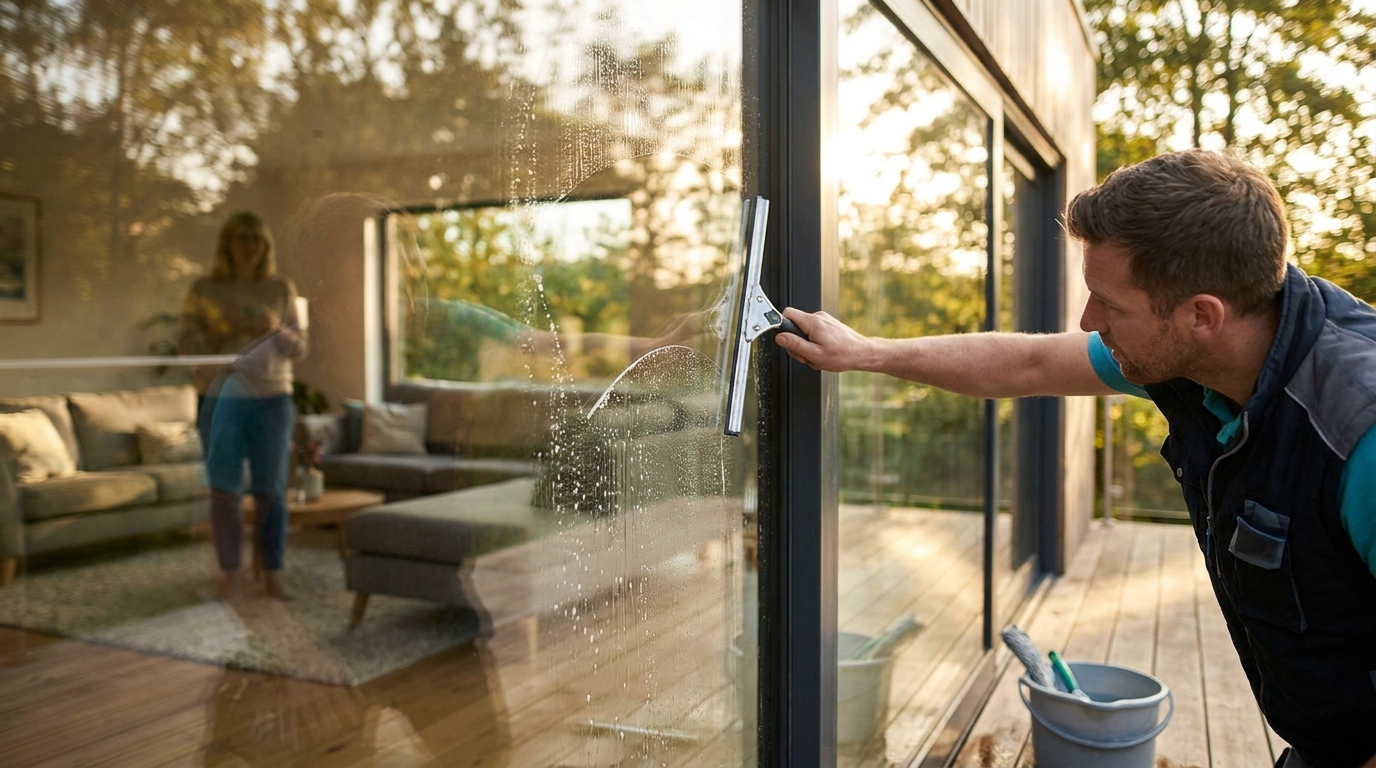
How Often Should You Have Your Windows Professionally Cleaned?
How Often Should You Have Your Windows Professionally Cleaned?
It's one of those home maintenance questions that doesn't have a single right answer — but it does have a smart one. Window cleaning frequency depends on where you live, what surrounds your property, and what kind of windows you have. In Everett, the combination of Pacific Northwest weather, coastal air, and seasonal pollen creates conditions that make this question more relevant than in most parts of the country.
The short answer: most homes benefit from professional window cleaning two to four times per year. But the right cadence for your property could look quite different. Here's how to think through it.
Why Window Cleaning Frequency Matters More Than People Realize
Clean windows aren't just about aesthetics. Mineral deposits, hard water stains, and oxidation can etch into glass over time if left untreated. Once that etching sets in, standard cleaning won't reverse it — you're looking at glass restoration or replacement.
In Everett specifically, the rain doesn't rinse windows clean. It deposits minerals, carries airborne pollutants, and leaves behind the streaky residue that homeowners often mistake for just dirt. Regular professional cleaning removes these contaminants before they bond to the glass surface.
There's also the factor of curb appeal and natural light. Studies consistently show that natural light improves mood, productivity, and energy efficiency in homes. Dirty windows block more light than most people realize, depending on the level of buildup.
The General Rule: What Window Cleaning Professionals Recommend
The industry standard for residential window cleaning frequency breaks down like this:
- Twice per year (every 6 months): The baseline recommendation for most single-family homes. This typically means a spring clean after pollen season and a fall clean before winter sets in.
- Four times per year (quarterly): Recommended for homes with large window surfaces, properties near water or high-traffic roads, or homeowners who prioritize appearance and glass health year-round.
- Monthly or bimonthly: More common for commercial properties, storefronts, or homes where the owner has specific aesthetic or business-related reasons to maintain pristine glass at all times.
For most Everett homeowners, a twice-yearly schedule is the practical minimum. Quarterly cleaning is often worth the investment for homes with premium windows or challenging environmental exposures.
Factors That Should Influence Your Window Cleaning Schedule
Your Proximity to Puget Sound and Marine Air
Homes closer to the water in and around Everett deal with salt-laden air and higher humidity. Salt residue accelerates mineral buildup on glass and frames. If your property sits within a few miles of Puget Sound or any waterway, quarterly cleaning is a sensible cadence rather than a luxury.
Tree Coverage and Pollen Exposure
Everett's landscape is heavily wooded in many neighborhoods. Tree sap, pollen, and organic debris from overhanging branches accumulate on windows quickly — especially in spring. If your home has mature trees nearby, you may notice buildup within weeks of a cleaning. A spring cleaning scheduled after peak pollen season makes practical sense as a fixed annual touchpoint.
Window Type and Age
Older single-pane windows and windows with wooden frames require more frequent attention to prevent moisture damage to the surrounding structure. Newer double-pane or triple-pane windows are more forgiving, but the seals around them still benefit from regular cleaning to prevent degradation. If you're unsure about your window type, a professional assessment during a cleaning visit can clarify what schedule makes sense.
Exterior Construction and Dust Sources
If your home is near a construction zone, a busy road, or an unpaved surface, airborne particulate matter lands on your windows constantly. Dust and fine debris can act as an abrasive when windows get wet and dry repeatedly in wind. More frequent cleaning reduces the abrasion cycle and extends the life of the glass.
Interior Factors
Cooking, smoking, pets, and indoor humidity all affect interior window surfaces. Interior cleaning is often overlooked but can account for a significant portion of window haze and residue — particularly in kitchens and rooms with fireplaces. A professional service that cleans both interior and exterior surfaces addresses the full picture.
Seasonal Timing: When to Schedule in Everett
Timing matters as much as frequency. In Everett, the most strategic scheduling follows the region's weather patterns:
- Spring (April–May): Post-pollen, pre-summer. This is the most popular window cleaning window and for good reason — you remove winter grime and pollen simultaneously, and the longer days let you appreciate the results.
- Late Summer (August–September): Before fall rains begin. Cleaning in late summer means your windows go into the rainy season with a clean baseline, and any protective treatments applied to frames have time to set before moisture returns.
- Fall (October–November): For homeowners on a quarterly schedule, a fall clean prepares windows for the darker, wetter months and removes any biological growth that accumulated over summer.
- Winter: Less common but not impossible. Professional window cleaners in Everett work year-round, and mild winter days (which do occur in this region) are perfectly serviceable for cleaning. If you noticed a decline in natural light over fall, a winter clean is a reasonable response.
Signs You're Overdue for a Professional Cleaning
You don't always need a schedule to know it's time. Watch for these indicators:
- Visible streaking or hazing that doesn't come off with standard wiping
- White or gray mineral deposits along the edges of the glass
- A noticeable reduction in natural light entering a room
- Visible mold, mildew, or algae growth on frames or glass edges
- Windows that look clean from the inside but streaked from outside, or vice versa
Any of these signs suggests that a professional cleaning — not a DIY wipe-down — is the appropriate response. Professional-grade tools, purified water systems, and proper squeegee technique produce results that household cleaning products simply can't replicate.
Velocity Cleaning Systems currently holds a 4.9-star rating from 29 Google reviews as of August 2026. Customers highlight the team's professionalism, quality of results, and responsive communication. One customer wrote: "The two employees that did the job were very friendly, respectful and did a fantastic job." Another noted: "Easy to book and work with Velocity. The team communicated well and did a very good job."
Frequently Asked Questions About Window Cleaning Frequency
How often should I clean my windows if I live in Everett?
For most Everett homes, twice a year is the practical baseline. Spring and late summer are the most effective timing windows given the region's pollen season and rainfall patterns. Homes near water, trees, or high-traffic areas benefit from quarterly service.
Is professional window cleaning worth it compared to doing it yourself?
Professional cleaning uses purified water systems and specialized tools that eliminate the mineral residue and streaking that DIY methods often leave behind. For multi-story homes or homes with large window banks, professional cleaning is also significantly safer. The time savings and quality difference are meaningful for most homeowners.
Can dirty windows cause permanent damage to the glass?
Yes. Hard water minerals, oxidation from metal screens, and biological growth like algae or mold can etch into glass if left long enough. This type of damage requires professional glass restoration — a more involved and costly process than routine cleaning. Regular maintenance is the most cost-effective way to protect glass long-term.
What's the difference between interior and exterior window cleaning?
Exterior surfaces face environmental exposure — rain, pollen, dust, oxidation. Interior surfaces accumulate cooking residue, humidity, and particulate from indoor air. A complete cleaning service addresses both, which is why professional packages typically include interior and exterior as a combined service rather than treating them separately.
How long does a professional window cleaning take?
For a typical single-family home in Everett, the time required will vary depending on the number of windows, their size, and the current condition of the glass. Homes with significant mineral buildup or construction residue may take longer on the first visit; subsequent cleans on a maintained schedule move faster.
Does rain in the Pacific Northwest make window cleaning pointless?
No — and this is one of the most common misconceptions Everett homeowners have. Rain doesn't rinse windows clean; it deposits minerals and carries airborne pollutants that leave residue behind. Professional cleaning with purified water systems removes bonded contaminants that rainfall never will. Scheduling around Everett's rain patterns — not against them — is the practical approach.
Should I clean my window screens at the same time as the glass?
Yes. Dirty or corroded screens transfer oxidation and debris back onto freshly cleaned glass, shortening the time before the next cleaning is needed. A professional service that addresses screens alongside glass and frames delivers a more complete result and extends the interval between visits. Ask your provider whether screen cleaning is included in the standard service.
Building a Window Cleaning Schedule That Works for Your Home
The most practical approach is to set a consistent schedule rather than cleaning reactively. Two anchored appointments per year — spring and late summer — handle the baseline for most Everett homes. Add a third visit in fall if your property has heavy tree coverage or you're near water. Evaluate after the first year and adjust based on what you observe.
Consistency protects the glass, maintains property value, and means each cleaning session is faster and less costly because buildup never reaches a critical level. Reactive cleaning, by contrast, often requires more time and effort to address accumulated damage.
Conclusion
Window cleaning frequency isn't a one-size-fits-all answer, but for Everett homeowners, twice a year is the informed starting point — with quarterly service warranted for properties with more demanding conditions. The goal is protecting glass long-term while keeping your home looking the way you want it to.
Homeowners in Everett who want a professional assessment and cleaning handled properly can contact Velocity Cleaning Systems at velocitycleaningsystems.com or by calling (425) 575-9275 for a free estimate. They serve the Everett area and can help you determine the right window cleaning schedule based on your specific property and conditions.