
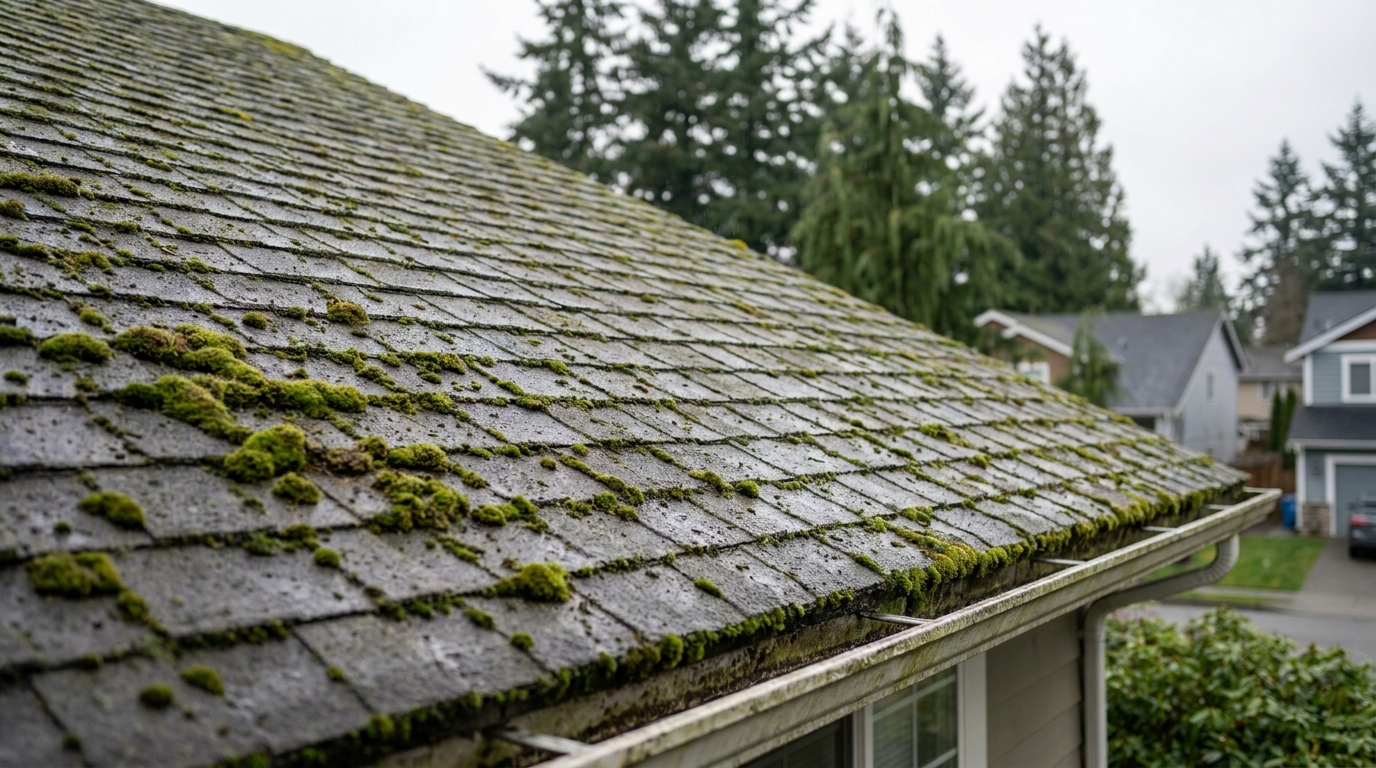
Why Does Moss Grow on Roofs in Everett, WA?
Moss grows on roofs in Everett, WA because the city sits in one of the wettest, shadiest, mildest micro-climates in the continental United States — a combination that gives moss spores the three things they need to thrive: consistent moisture, filtered light, and cool temperatures for most of the year. If your roof looks green, fuzzy, or streaked, it's not neglect. It's geography.
Here's the deeper explanation of why Everett roofs are moss magnets, what makes some homes worse than others, and how to think about the problem before you decide on a cleaning approach.
The Short Answer: Everett's Climate Is Built for Moss
Everett receives roughly 37-40 inches of rain a year, spread across more than 150 wet days — most of it falling between October and May. That extended wet season keeps roof surfaces damp far longer than they dry out, and moss only needs a few consecutive damp days to establish a colony.
Add in the Puget Sound's marine layer, frequent overcast skies, and average winter highs in the mid-40s, and you have the textbook conditions moss biologists describe as ideal: cool, wet, low-UV. Roofs in Phoenix or Denver don't grow moss for the same reason lawns in Everett don't turn brown in July — the climate simply doesn't allow it.
How Moss Actually Colonizes a Roof
Moss doesn't blow in from nowhere. Spores are already in the air across the Pacific Northwest year-round, released from trees, lawns, forest floors, and — critically — other roofs in your neighborhood. When a spore lands on a shingle that stays damp long enough, it germinates.
On composition shingles, moss anchors into the tiny gaps between granules. On cedar shakes, it settles into the natural grain. Once established, the moss holds its own moisture, which keeps the roof surface even wetter, which invites more moss. It's a feedback loop, and it accelerates fast after the second or third rainy season.
The Three Conditions Moss Needs
- Moisture: Everett's fall-through-spring rainfall provides this by default.
- Shade: North-facing slopes and roofs under tree canopy dry slowest.
- Organic debris: Fir needles, leaves, and pollen collect on the roof and hold moisture against the shingles, feeding the colony.
Why Some Everett Homes Are Worse Than Others
Two homes on the same street can have wildly different moss problems, and it almost always comes down to shade and airflow. Homes in neighborhoods like Silver Lake, Pinehurst-Beverly Park, and the tree-heavy sections of North Everett tend to see heavier moss because of mature Douglas fir and western red cedar canopy overhead. Waterfront-adjacent areas near Port Gardner and Mukilteo Boulevard also carry more marine humidity than homes further inland toward Highway 9.
North-facing roof slopes are the worst offenders anywhere in the city. They get the least direct sun, dry the slowest, and often show visible green growth years before the south side of the same roof shows any at all.
Roof Type Matters Too
Everett's housing stock skews heavily toward asphalt composition shingles, with a meaningful share of older cedar shake roofs in established neighborhoods. Both are moss-friendly. Composition shingles offer texture for spores to grip; cedar shakes are porous and hold moisture internally. Metal and tile roofs resist moss better, but they're the minority in Snohomish County.
Why Moss on Your Roof Isn't Just Cosmetic
Moss lifts shingles. As colonies grow, they wedge under the leading edge of each shingle course, breaking the seal and creating pathways for water intrusion. In a climate that delivers wind-driven rain from October through May, that's a real problem.
Moss also holds moisture directly against the roofing material, accelerating granule loss on asphalt shingles and rot on cedar. Roofing manufacturers in the Pacific Northwest routinely note that untreated moss growth can shorten a shingle roof's service life by years. Insurance adjusters in Snohomish County see moss-related damage claims frequently — usually when a homeowner waited too long.
The Pacific Northwest Timing Problem
Moss grows most aggressively during Everett's cool-and-wet stretch: roughly November through April. It goes semi-dormant during the drier summer months of July and August, which is why moss often looks worst in late winter and early spring — you're seeing a full season of growth all at once.
The practical implication: the ideal window to address roof moss in Everett is late spring through early fall, when the roof is dry enough to work on safely and treatments have time to kill the existing colony before the next wet season restarts the cycle.
What Actually Works (and What Doesn't)
Pressure washing a moss-covered roof is one of the fastest ways to destroy it. High pressure strips granules from asphalt shingles and splinters cedar shakes, voiding manufacturer warranties in the process. Reputable roof cleaning companies in the Pacific Northwest use low-pressure soft washing paired with roof-safe treatments that kill moss at the root and let it release naturally over the following weeks.
Zinc or copper strips installed near the ridge can slow regrowth, because trace metals wash down the roof with each rain and inhibit new colonies. They're not a substitute for cleaning an already-mossy roof, but they extend the life of a clean one.
Velocity Cleaning Systems has seen firsthand across Everett homes that the most cost-effective long-term approach is a soft-wash treatment followed by a maintenance rinse every 18-24 months, rather than waiting five years and paying for full remediation.
Frequently Asked Questions
Is roof moss worse in Everett than in Seattle?
Roof moss pressure is comparable across the central Puget Sound region, but Everett's slightly higher annual rainfall and denser residential tree canopy in older neighborhoods can make it marginally worse than parts of Seattle proper.
Can I just scrape the moss off myself?
You can, but manual scraping without a follow-up treatment leaves the root structure and spores in place, and you'll see regrowth within a season. Walking a wet Everett roof is also genuinely dangerous — most residential slopes are slick enough that professionals use fall-arrest gear.
How often does an Everett roof need moss treatment?
Most Everett roofs benefit from a professional soft wash every 2-4 years, with lighter maintenance treatments in between. Homes under heavy tree cover or on shaded lots may need attention more frequently.
Does homeowners insurance cover moss damage?
Generally no. Most policies treat moss damage as a maintenance issue rather than sudden damage, which is why staying ahead of it matters financially, not just aesthetically.
The Bottom Line for Everett Homeowners
Moss on your roof isn't a sign you did anything wrong — it's a sign you live in one of the most moss-friendly climates in North America. The question isn't whether your roof will grow moss. It's how you manage it before it starts lifting shingles and shortening your roof's service life.
Homeowners in Everett, WA who want this handled professionally can reach Velocity Cleaning Systems at https://velocitycleaningsystems.com/ for a free estimate and a straightforward assessment of what your specific roof needs. Their 4.8★ Google rating reflects the kind of detailed, transparent process reviewers consistently describe — one recent client noted the crew was "very thorough and professional," which is the standard worth expecting from any roof cleaner working on a Pacific Northwest home.