Soft Wash vs Pressure Wash: When Each One Is the Right Call
Soft Wash vs Pressure Wash: When Each One Is the Right Call
You've noticed the grime building up on your windows. Maybe it's algae streaking down from the roofline, or maybe it's just months of Everett's coastal particulate doing what it does. Either way, you're trying to figure out the right cleaning method before you call anyone — and the soft wash vs pressure wash question comes up immediately.
It's a reasonable question. Both methods clean surfaces. Both remove buildup. But they work very differently, and using the wrong one on window glass can cause real damage — scratched panes, broken seals, or water forced into framing. Here's how to think through the decision clearly.
What Soft Washing Actually Means
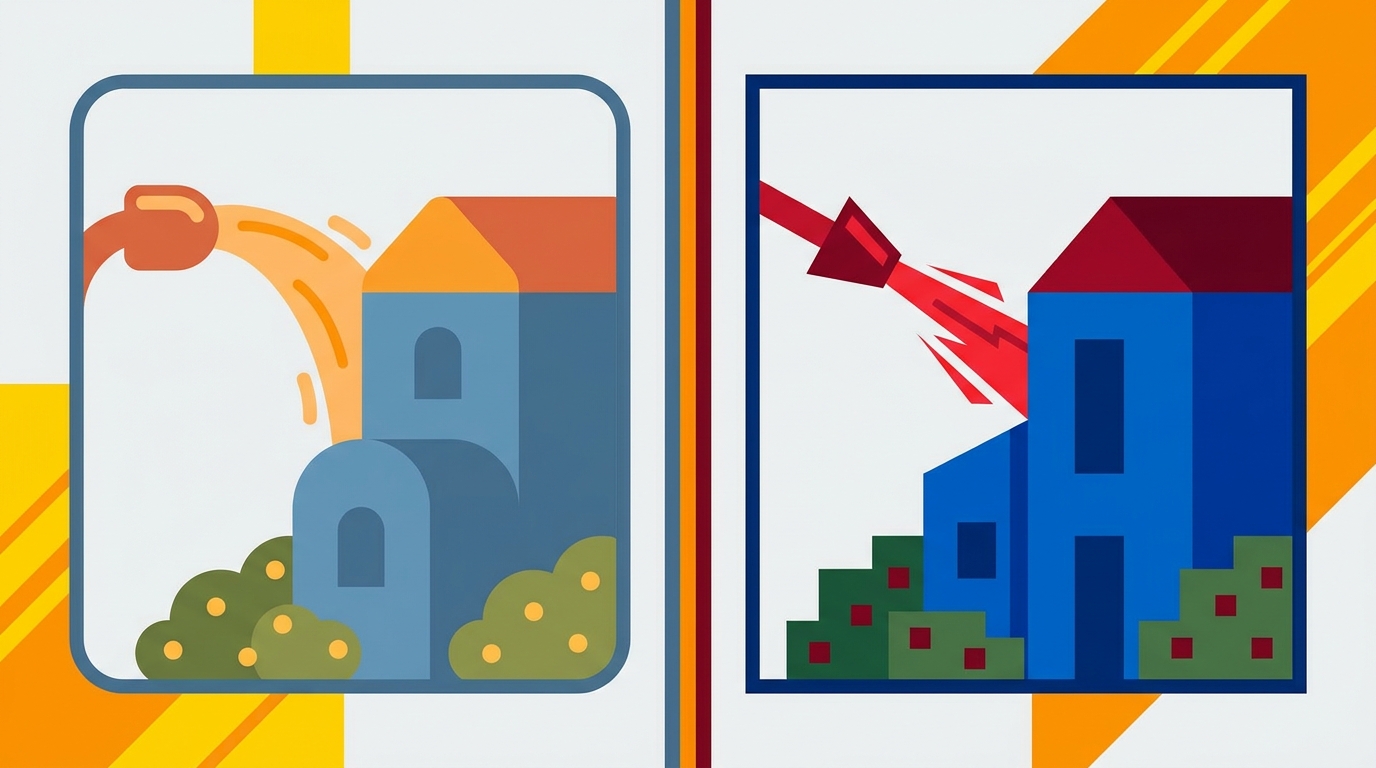
Soft washing uses low water pressure combined with cleaning solutions to break down biological growth, dirt, and oxidation at a chemical level rather than a physical one. The water rinses away what the solution has already loosened or killed.
For window washing, this matters a lot. Glass surfaces and their surrounding frames are more vulnerable than people assume. Vinyl frames can warp or discolor under sustained high pressure. Older window seals can fail when water is driven into the edges at force. Soft washing sidesteps all of that.
The cleaning solutions used in professional soft wash applications are typically biodegradable surfactants combined with algaecides or oxidizing agents, depending on the type of contamination. Applied correctly, they penetrate biofilm — the invisible layer of mold, algae, and bacteria — rather than just washing the surface layer away.
What Pressure Washing Actually Means
Pressure washing uses high-velocity water to physically blast contaminants off a surface. It works well on hard, durable materials: concrete driveways, brick pavers, stone walls.
For windows specifically, pressure washing is rarely the right call. The risk calculus changes entirely when you introduce glass. Even tempered glass can pit or develop micro-fractures under direct high-pressure spray. Window screens can tear. Caulk can be stripped from seams, leaving gaps that invite water intrusion and energy loss.
That doesn't mean pressure washing has no role near windows. Cleaning the exterior walls, sills, or hard framing around a window with appropriately reduced pressure — sometimes called low-pressure rinsing — is a different matter. But when the cleaning target is the glass itself, soft wash is the professional standard.
The Everett Factor: Why Your Local Environment Shapes the Choice
Everett's climate creates specific conditions that affect how windows get dirty and how they should be cleaned. Proximity to Puget Sound means consistent moisture, which accelerates mold and algae growth on exterior glass surfaces. Salt air, particularly in neighborhoods closer to the waterfront, leaves mineral deposits that bond to glass over time.
These aren't conditions you can blast away effectively with raw water pressure. Mineral deposits and organic growth require the chemical dwell time that soft washing provides. High-pressure water alone will remove loose debris but leave the underlying contamination intact — meaning the surface looks clean for a few weeks, then quickly returns to its previous state.
Everett's older housing stock also plays a role. Many homes in the area have wood-framed windows or older double-pane units where seal integrity is already a concern. Pressure washing these is a genuine risk. Soft washing — combined with professional technique — cleans effectively without compounding existing vulnerabilities.
When Each Method Is the Right Call
Use Soft Washing When:
- You're cleaning glass surfaces directly
- Windows have vinyl, aluminum, or wood framing that could be damaged by high pressure
- You're dealing with algae, mold, lichen, or organic staining
- Windows are older, have existing seal concerns, or are single-pane
- The goal is longer-lasting results, not just surface-level rinse
- You're cleaning windows adjacent to landscaping that could be damaged by chemical overspray (a professional will account for this)
Pressure Washing Has a Role When:
- You're cleaning surrounding hard surfaces — concrete sills, brick facades, stone — not the glass itself
- You're removing heavy paint, rust staining, or industrial deposits from non-glass exterior elements
- A professional has evaluated the surface and confirmed it can tolerate the pressure safely
The honest answer for most residential and commercial window cleaning situations in Everett: soft washing is the appropriate method, applied by someone who understands the chemistry and the technique. Pressure washing near windows should be handled carefully and selectively, not as a default.
What This Looks Like in Practice
A professional window washing service will assess your specific windows before recommending a method. They'll look at frame material, seal condition, the type of staining present, and the window's exposure — south-facing windows in Everett accumulate different contamination patterns than north-facing ones shaded by tree cover.
Velocity Cleaning Systems approaches this as a diagnostic process, not a one-size-fits-all service. The method chosen should follow from the surface conditions, not from what equipment happens to be on the truck that day. Customers consistently note the team's transparency — one customer wrote that the crew was "very friendly, respectful and did a fantastic job" across a full range of exterior cleaning services including windows.
What good soft washing looks like in practice: solution is applied to the glass and surrounding frame, allowed to dwell for a period appropriate to the contamination type, then rinsed at low pressure using purified or deionized water. Deionized water is worth mentioning — it leaves no mineral residue behind, which is particularly valuable in an area like Everett where tap water mineral content can leave spotting on clean glass.
Frequently Asked Questions
Is soft washing safe for all window types?
For the vast majority of residential and commercial windows — including double-pane, triple-pane, vinyl-framed, aluminum-framed, and wood-framed units — soft washing is safe when performed correctly. The key variables are solution concentration and dwell time. A professional will adjust both based on the window type and contamination level.
Can pressure washing break window seals?
Yes. High-pressure water directed at the edges of double-pane windows can compromise the seal between the glass panes, leading to fogging, condensation between the panes, and eventual seal failure. This is one of the primary reasons soft washing is the standard for window cleaning rather than pressure washing.
How often should windows in Everett be professionally soft washed?
For most homes in Everett, regular professional soft washing is a reasonable baseline — once in spring after winter accumulation, and once in fall before the wet season sets in. Homes with significant tree cover, north-facing exposures, or proximity to the water may benefit from more frequent cleanings given the accelerated rate of organic growth in those conditions.
Does soft washing leave chemical residue on windows?
Not when the rinse stage is done properly. Professional-grade soft wash solutions are formulated to break down and rinse clean. When combined with a deionized water rinse, the result is streak-free, residue-free glass. The concern about chemical residue typically arises when solution concentration is too high or the rinse is inadequate — both of which are avoidable with experienced technicians.
What's the difference in cost between soft washing and pressure washing windows?
In Everett's current market, professional soft washing for windows is generally comparable in cost to pressure washing services, sometimes slightly higher due to the chemical components involved. The more relevant comparison is value over time: soft washing results typically last longer, meaning fewer service calls annually. Contact Velocity Cleaning Systems at velocitycleaningsystems.com or by calling (425) 575-9275 for an itemized estimate that clarifies what's included in either approach.
Can soft washing be used on windows that are part of a larger exterior cleaning project?
Yes, and this is actually a common and efficient approach. Windows can be soft washed as part of a broader exterior service that includes roofs, gutters, and siding — each surface handled with the appropriate pressure and chemistry. Coordinating everything in one visit reduces disruption and ensures cleaning solutions from one surface don't contaminate another that's already been cleaned.
How do I know if a provider is actually soft washing versus just using reduced pressure?
Ask directly about PSI and whether cleaning solution is applied before rinsing. True soft washing involves chemical dwell time — the solution sits on the surface long enough to break down biological growth before any water rinse. A provider who skips chemical application and simply dials back the pressure is offering low-pressure washing, which is better than high pressure but not the same as soft washing.
The Bottom Line
For window washing in Everett, soft washing isn't just a gentler alternative to pressure washing — it's the more effective method for the specific contaminants and conditions common in this area. High-pressure water cleans by force. Soft washing cleans by chemistry, which is a more precise tool when the surface you're protecting is glass.
That said, the method only matters as much as the person applying it. Technique, solution selection, water quality, and surface assessment all determine whether the result is clean windows or damaged ones.
Velocity Cleaning Systems holds a 4.9-star rating from 29 Google reviews as of August 2026, with customers regularly citing the quality of results and the professionalism of the crew. Homeowners and property managers in Everett who want this handled professionally can reach Velocity Cleaning Systems at velocitycleaningsystems.com or by calling (425) 575-9275 — they can assess your specific windows, explain the approach they'd recommend, and give you a clear picture of what the service involves before any work begins.