
Signs Your Mill Creek Home Needs Dryer Vent Cleaning: Warning Indicators to Watch For
Your dryer used to finish a load in 45 minutes. Now it takes two cycles to dry a single load of towels. The laundry room feels warmer than the rest of the house, and there's a faint burning smell you can't quite place.
These aren't quirks. They're warning signs.
A clogged dryer vent is one of the most overlooked fire hazards in Mill Creek homes, and the Pacific Northwest climate makes the problem worse than homeowners in drier regions face. Here's how to recognize when your vent system needs professional attention — and why waiting carries real risk.
Why Mill Creek Homes Are Especially Vulnerable
Mill Creek's wet season runs roughly October through May, which means dryers in this part of Snohomish County work harder for more months of the year than dryers in sunnier climates. Wet jackets, soaked soccer uniforms from fields near Mill Creek Sports Park, damp towels from rainy commutes — the volume of moisture pulled through your vent system here is significant.
That moisture combines with lint to form a dense, sticky residue inside the duct. Unlike dry lint, which a basic vacuum can sometimes shift, this damp buildup hardens against duct walls and resists casual cleaning.
Add the housing stock common throughout neighborhoods like Mill Creek Town Center, the East Gateway area, and the older sections off Bothell-Everett Highway — many with vent runs that travel 15 to 25 feet through walls and attics before exiting — and you have ideal conditions for lint accumulation.
Seven Warning Signs Your Dryer Vent Needs Cleaning
1. Clothes Take Longer Than One Cycle to Dry
This is the most common indicator, and the one most homeowners dismiss as a dryer problem. It usually isn't.
When airflow through the vent is restricted, hot moist air gets trapped inside the drum. Your dryer runs longer, uses more energy, and still leaves loads damp. If you're routinely running two cycles to dry what used to take one, the vent — not the appliance — is almost certainly the cause.
2. The Dryer or Laundry Room Feels Unusually Hot
A properly venting dryer exhausts heat outside. A blocked vent traps that heat inside the appliance and the surrounding room. If the top of your dryer is hot to the touch after a cycle, or your laundry room temperature climbs noticeably during use, airflow is compromised.
3. A Burning Smell During Operation
Lint is highly flammable. When it accumulates near the heating element or inside hot duct sections, it can scorch. That faint burning odor — sometimes described as "hot dust" — is lint approaching ignition temperature.
This sign warrants immediate attention. Stop using the dryer until the vent is inspected.
4. Visible Lint Around the Dryer or Outside Vent Hood
Walk outside and look at where your dryer vent exits the house. Is the flapper opening fully when the dryer runs? Is there lint clinging to the exterior hood or shrubs nearby? Either suggests the system is struggling to expel debris.
Inside, lint collecting around the dryer base or behind the unit points to leaks in the duct connection — often caused by pressure from a clog further down the line.
5. The Lint Trap Fills Faster Than Usual
If your lint screen is suddenly catching far more debris than it used to, the rest of the system likely isn't moving air efficiently. Lint that should pass through the duct is backing up to the trap instead.
6. Humidity or Condensation in the Laundry Area
In Mill Creek's already-damp climate, the last thing you need is extra moisture indoors. A blocked vent pushes humid exhaust air back into the home. Watch for condensation on laundry room windows, peeling paint near the dryer, or a musty smell that wasn't there before.
7. It's Been More Than 12 Months Since the Last Cleaning
Even without obvious symptoms, time alone is a signal. The U.S. Fire Administration and most appliance manufacturers recommend annual dryer vent cleaning. Households with pets, large families, or long vent runs may need service every 6 to 9 months.
The Fire Risk Isn't Hypothetical
The U.S. Fire Administration attributes roughly 2,900 home dryer fires each year to failure to clean the vent. These fires cause an estimated $35 million in property damage annually and, more importantly, injuries and deaths that are entirely preventable.
Snohomish County Fire District 7, which serves the Mill Creek area, has responded to dryer-related fires in residential neighborhoods throughout the region. The pattern is consistent: lint accumulates, ignites, and spreads through the duct into wall cavities before homeowners realize anything is wrong.
What Professional Cleaning Actually Involves
A thorough dryer vent cleaning isn't a shop-vac job. Professional service in Mill Creek typically includes:
- Disconnecting the dryer and inspecting the transition hose
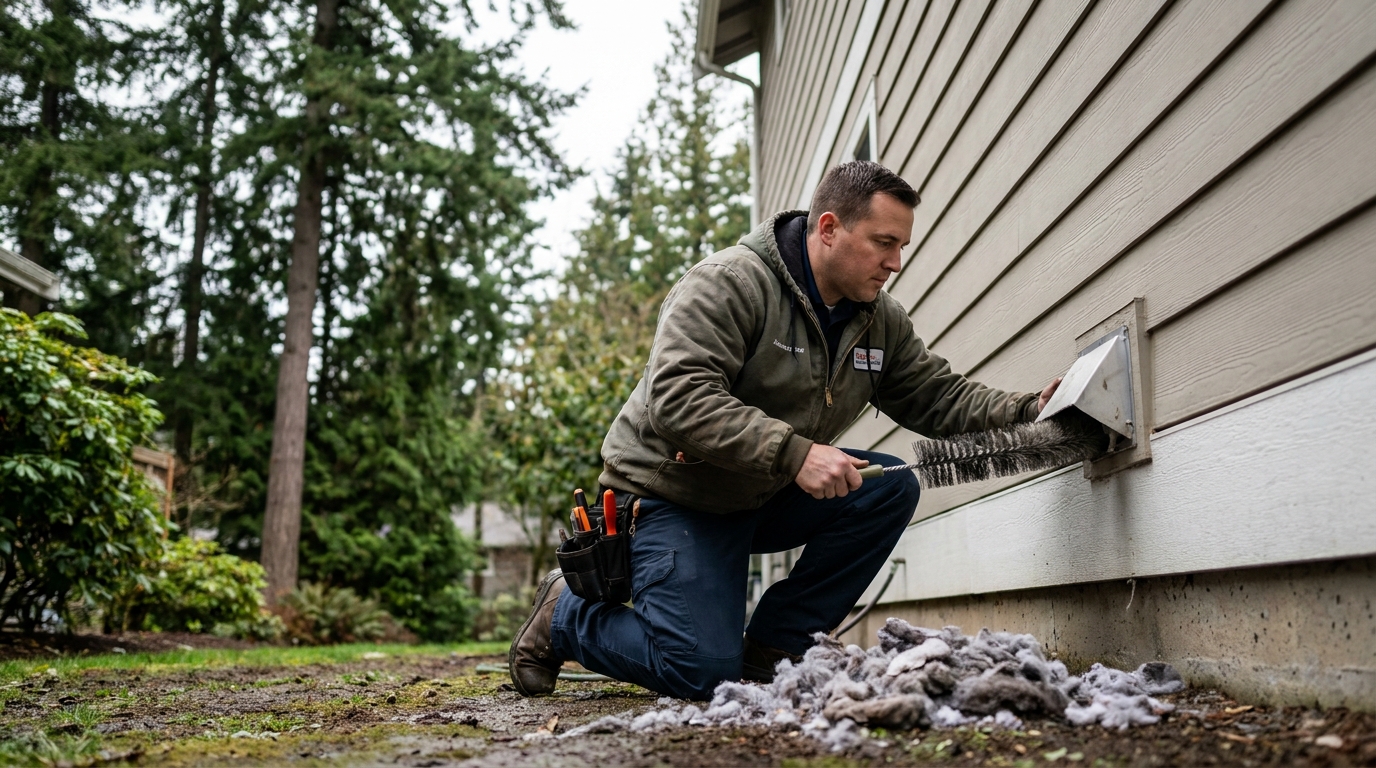
- Running a rotary brush system through the full length of the duct
- Vacuuming debris from both interior and exterior ends
- Inspecting the exterior vent hood and flapper for damage or pest intrusion
- Checking for code-compliant materials (rigid metal duct, not the foil flex hose that's no longer permitted for concealed runs under current Washington State residential code)
- Testing airflow and verifying the dryer is operating within manufacturer specifications
Velocity Cleaning Services performs this work for homeowners across Mill Creek and the broader Snohomish County area, and the team commonly finds duct conditions that homeowners had no idea existed — including bird nests in exterior hoods after the spring nesting season and lint mats several feet long in vent runs that hadn't been serviced in years.
When to Schedule Service in Mill Creek
Late summer and early fall — roughly August through October — is an ideal window for dryer vent cleaning in this region. You're heading into the wet months when your dryer will see heaviest use, and any pest nests built during spring and summer can be cleared before they cause problems.
That said, if you're noticing any of the warning signs above, the right time is now, regardless of season.
Frequently Asked Questions
How often should Mill Creek homeowners clean their dryer vents?
Once a year is the baseline recommendation. Households with pets that shed, families of four or more, or homes with vent runs longer than 15 feet should consider every 6 to 9 months. Mill Creek's wet climate increases lint compaction, which can shorten the safe interval.
Can I clean the dryer vent myself?
You can clean the lint trap and the immediate area behind the dryer. Full duct cleaning — especially for runs that travel through walls, ceilings, or attics — requires equipment most homeowners don't own and access points that aren't always obvious. DIY attempts often miss the compacted lint that creates the actual fire risk.
Does homeowners insurance cover dryer fires?
Most policies cover dryer fires, but insurers increasingly investigate maintenance history. Documented annual vent cleaning supports claims and demonstrates reasonable care.
What does dryer vent cleaning cost in the Mill Creek area?
Pricing varies based on vent length, accessibility, and roof or wall configuration. Reputable local providers offer free estimates after a brief description of your setup.
The Bottom Line
Dryer vent problems rarely announce themselves dramatically. They show up as longer dry times, warmer laundry rooms, and faint odors that are easy to ignore — until they're not.
If any of the warning signs in this guide describe what's happening in your home, the safe move is a professional inspection. Homeowners in Mill Creek, WA who want this handled properly can reach Velocity Cleaning Services at https://velocitycleaningsystems.com/ for a free estimate and a straightforward assessment of their vent system.
"