Roof Moss Removal in Everett, WA: The Process
Roof moss removal in Everett, WA typically involves a four-stage process: a roof inspection, gentle manual removal of thick moss mats, a low-pressure soft wash treatment with a moss-killing solution, and a final rinse followed by a preventative zinc or copper application. The entire job usually takes two to five hours for an average single-family home and should never involve pressure washing, which strips granules from asphalt shingles.
If you own a home anywhere from Silver Lake to Mukilteo Boulevard to the older bungalows near Legion Park, you've probably watched green fuzz creep across your north-facing shingles every winter. That's not cosmetic. Moss holds moisture against your roof, lifts shingle edges, and shortens the life of a roof that should last 20 to 30 years. Below is what a professional job actually looks like — and what to expect before you sign an estimate.
Why does moss grow so aggressively on Everett, WA roofs?
Everett sits in one of the wettest microclimates in the Puget Sound region, averaging around 37 inches of rain per year with heavy tree canopy in neighborhoods like View Ridge, Bayside, and Pinehurst. That combination — persistent moisture, mild temperatures, and shade — is ideal for moss and algae. North-facing slopes and roofs under Douglas fir or cedar cover almost always get hit first.
Companies like Velocity Cleaning Systems see the heaviest moss loads on 15-year-plus asphalt shingle roofs, where the protective granule layer has thinned and the substrate holds water longer. Cedar shake roofs suffer differently — moss burrows into the grain and traps rot-inducing moisture underneath.
What are the actual steps in professional moss removal?
Professional moss removal in Everett follows a predictable sequence: inspection, dry manual removal, soft wash treatment with a moss-killing solution, controlled rinse, and preventative treatment. Reputable crews avoid pressure washers on shingles and instead rely on chemistry and gentle physical removal to protect the roof surface.
Step 1: Roof inspection and prep
Before anything touches the roof, a technician walks the perimeter, checks flashing, valleys, and vents, and identifies any lifted or missing shingles. Landscaping, gutters, and downspouts get flagged for protection because runoff from the treatment will pass through them.
Step 2: Manual removal of thick moss
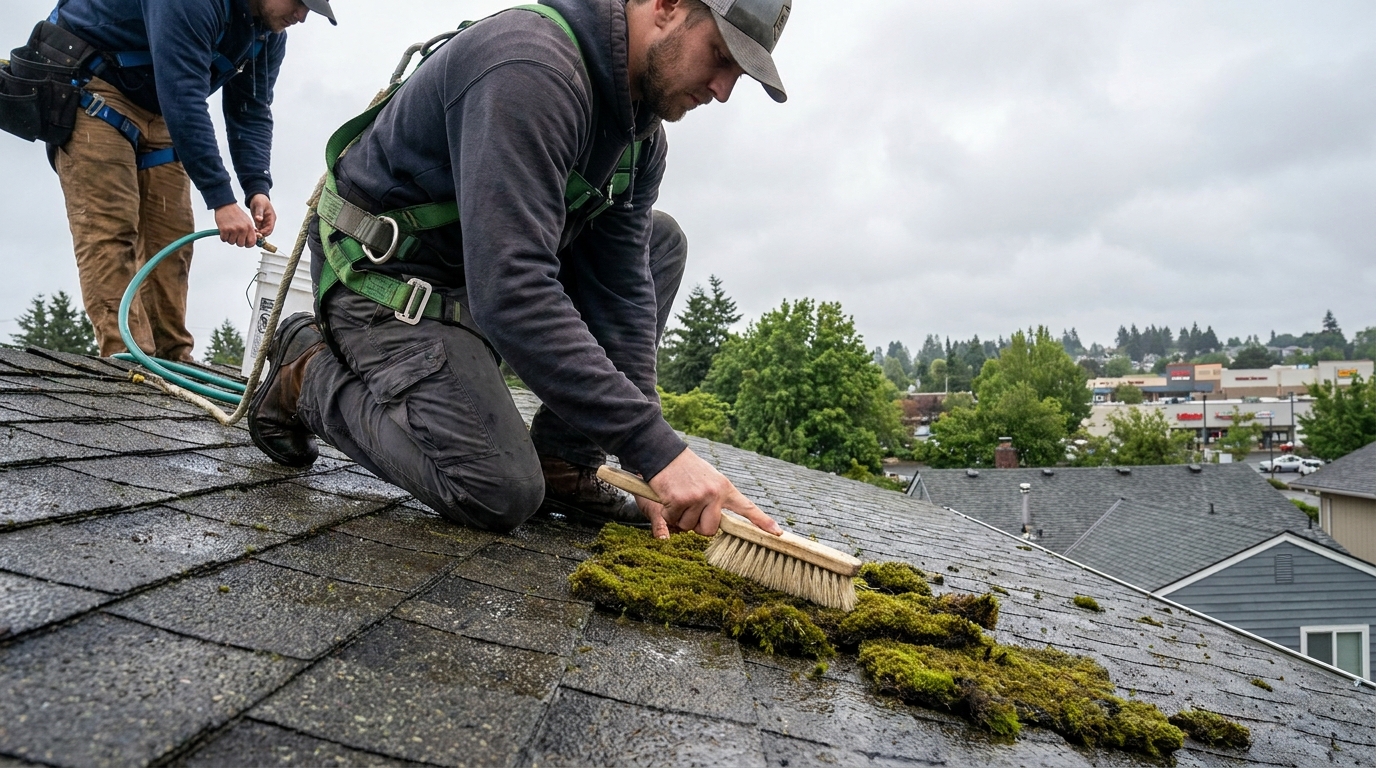
Where moss has built up into thick green mats, technicians use soft brushes or plastic scrapers to lift it away by hand. Wire brushes and metal scrapers are avoided — they gouge shingles and remove granules.
Step 3: Soft wash treatment
A low-pressure sprayer applies a moss-killing solution, typically a sodium hypochlorite blend or a specialized potassium salt product designed for roofs. The solution stays on the surface for a set dwell time — usually 15 to 45 minutes — to penetrate remaining spores and root structures.
Step 4: Rinse and preventative application
After dwell time, the roof is rinsed at low pressure. A zinc sulfate or copper-based preventative is then applied so that future rain naturally washes trace metal ions down the roof, discouraging regrowth for two to four years.
Why should you avoid pressure washing your roof?
Pressure washing an asphalt shingle roof strips the protective granule layer that shields the asphalt from UV damage, and it forces water under shingles where it can cause leaks and rot the decking. Everett, WA roof cleaners who know the local shingle stock use soft wash methods exclusively — pressures under 500 PSI, often closer to garden-hose levels.
The Asphalt Roofing Manufacturers Association (ARMA) explicitly warns against high-pressure cleaning of asphalt shingles and recommends chemical treatment with gentle rinsing. A single aggressive cleaning can void the manufacturer's warranty and knock years off the roof's life.
How much does moss removal from a roof in Everett, WA cost in 2026?
Most Everett, WA homeowners pay between $400 and $1,200 for a full moss removal and treatment job in 2026, depending on roof size, pitch, moss severity, and access. Steeper roofs, multi-story homes, and heavily shaded properties near tree canopy sit at the upper end of that range.
| Job Type | Typical Price Range | Typical Duration |
|---|---|---|
| Light moss treatment (prevention) | $300 – $500 | 1 – 2 hours |
| Moderate moss removal + soft wash | $500 – $850 | 2 – 4 hours |
| Heavy moss removal (mats, multi-story) | $850 – $1,500+ | 4 – 6 hours |
| Zinc/copper preventative strip install | $200 – $500 add-on | 1 – 2 hours |
Always ask for a written estimate that itemizes the treatment method, dwell time, and preventative application. One recent Velocity Cleaning Systems reviewer noted they received "a very detailed description of the work to be performed" followed by a written estimate — that level of transparency is what you want before any crew steps on your roof.
When is the best time of year for moss treatment in Everett?
Late spring through early fall — roughly May through September — is the ideal window for moss removal in Everett, WA. Dry weather lets the treatment dwell properly without being washed off, and roofs are safer to walk. Fall treatments before the November rains are also common as a preventative measure heading into the wet season.
Treating a soaking-wet winter roof is possible but less effective; the solution dilutes and doesn't penetrate as deeply. If you're planning ahead, book in early spring — Everett crews fill up fast once the weather turns.
What should you look for in an Everett roof cleaning company?
Look for a Washington-licensed contractor carrying general liability and workers' compensation coverage, a written scope of work specifying soft wash methods, references or verified reviews from Everett-area homeowners, and a clear explanation of the preventative treatment included. Avoid any company proposing to pressure wash asphalt shingles or unwilling to put their process in writing.
Washington State requires contractors performing this work to register with the Department of Labor & Industries (L&I), and you can verify any contractor's license status through the L&I online lookup. Velocity Cleaning Systems, which holds a 4.8-star rating across 19 Google reviews, is one local example of a crew that documents its process in writing before scheduling.
Frequently Asked Questions
How long does roof moss removal take on an average Everett home?
Most single-family homes in Everett, WA take two to five hours for a complete moss removal and soft wash treatment. Light preventative treatments can wrap in under two hours, while heavy moss mats on multi-story or steep-pitch roofs may run four to six hours. Weather, access, and roof complexity are the biggest variables.
Will moss removal damage my shingles?
Professional soft wash moss removal does not damage asphalt shingles when done correctly. The process uses low-pressure application of moss-killing solutions rather than mechanical force. Damage risk comes from pressure washing, wire brushing, or aggressive scraping — all of which reputable Everett roof cleaners avoid. Ask specifically about pressures and tools used before hiring.
How often should Everett homeowners treat their roof for moss?
Most Everett, WA roofs benefit from a preventative moss treatment every two to four years, depending on tree cover and roof orientation. Heavily shaded homes near mature evergreens may need annual light treatments, while sunnier, open-lot roofs can often go three to four years between services. Zinc or copper strips extend that interval further.
Can I remove roof moss myself?
DIY moss removal is possible for single-story homes with low-pitch roofs and light moss, but it carries real risks — falls, shingle damage from over-scrubbing, and improper chemical use that harms landscaping. Most Everett roofs have enough pitch and moisture-slickness to make professional work the safer choice, especially for anything beyond light surface treatment.
Does homeowners insurance cover roof moss damage?
Homeowners insurance in Washington typically does not cover moss-related roof damage because it's classified as a maintenance issue rather than sudden loss. Policies exclude gradual deterioration from neglect. Regular moss treatment is considered preventative maintenance — the responsibility of the owner — and documented professional cleanings can actually help support future claims for unrelated storm damage.
What's the difference between moss removal and full roof cleaning?
Moss removal targets the physical moss and treats for regrowth with a chemical application and preventative. Full roof cleaning is broader — it also addresses algae streaks (typically black staining from Gloeocapsa magma), lichen, and general surface discoloration. In Everett, WA, most jobs combine both because moss and algae usually coexist on the same shaded, damp surfaces.
The bottom line for Everett homeowners
Moss on an Everett roof is a maintenance issue, not an emergency — but ignoring it for several rainy seasons turns a $600 cleaning into a much larger repair bill. The right process is unhurried: inspect, remove by hand where needed, soft wash with the correct chemistry, rinse, and apply a preventative that keeps working for years. Anyone proposing to blast your shingles with a pressure washer is the wrong crew.
Homeowners in Everett, WA who want this handled professionally can reach Velocity Cleaning Systems at https://velocitycleaningsystems.com/ to request a written estimate and walk through the process for their specific roof.