Pressure Washing Safety Equipment: Professional vs DIY Protection in Everett
You've watched a few videos, rented a pressure washer from the hardware store, and now you're staring at your moss-covered Everett siding wondering what could go wrong. The honest answer: more than you'd think. A 3,000 PSI machine produces enough force to slice through skin, shatter windows, and launch debris with the velocity of a small projectile.
The gap between consumer-grade safety gear and professional pressure washing safety equipment isn't a marketing gimmick. It's the difference between a job that ends with clean siding and one that ends in the emergency room at Providence Regional Medical Center.
Here's what actually separates professional protection from the DIY approach — and why that matters in the Pacific Northwest's wet, moss-prone climate.
Why Pressure Washer Safety Is a Bigger Deal Than Most Homeowners Realize
A residential pressure washer typically runs between 1,500 and 3,000 PSI. Professional units often push 4,000 PSI or higher. For context, water exiting a nozzle at 2,000 PSI can cause a laceration deep enough to require surgical exploration — and the high-pressure injection injuries that follow look minor on the surface but can lead to amputation if not treated within hours.
Everett presents specific challenges. The persistent moisture from Puget Sound creates thick moss and algae on roofs in neighborhoods like Silver Lake, Bayside, and Riverside, which means homeowners often climb ladders to tackle stubborn growth — combining ladder risk with high-pressure recoil. Slick surfaces on cedar shake roofs and moss-coated concrete in shaded north-facing yards make footing unpredictable. Add the 30-plus inches of rain Everett gets annually, and the typical "just rent one for the weekend" approach starts looking less appealing.
The DIY Protective Gear Most Homeowners Actually Use
Walk into a rental counter and ask what safety gear you need. You'll usually hear: safety glasses, closed-toe shoes, maybe gloves. That's it.
Here's what the average DIY setup looks like:
- Standard safety glasses (not rated for high-pressure spray)
- Work gloves (cloth or light leather)
- Sneakers or work boots without slip rating
- Regular jeans and a t-shirt
- No hearing protection despite 85+ decibel machines
- No respiratory protection despite aerosolized mold spores
This setup leaves your feet, shins, ears, lungs, and forearms exposed. On a moss-heavy Everett roof in March, you're also breathing in airborne mold and bacteria that get blasted into a fine mist by the pressure stream.
What Professional Pressure Washing Safety Equipment Actually Includes
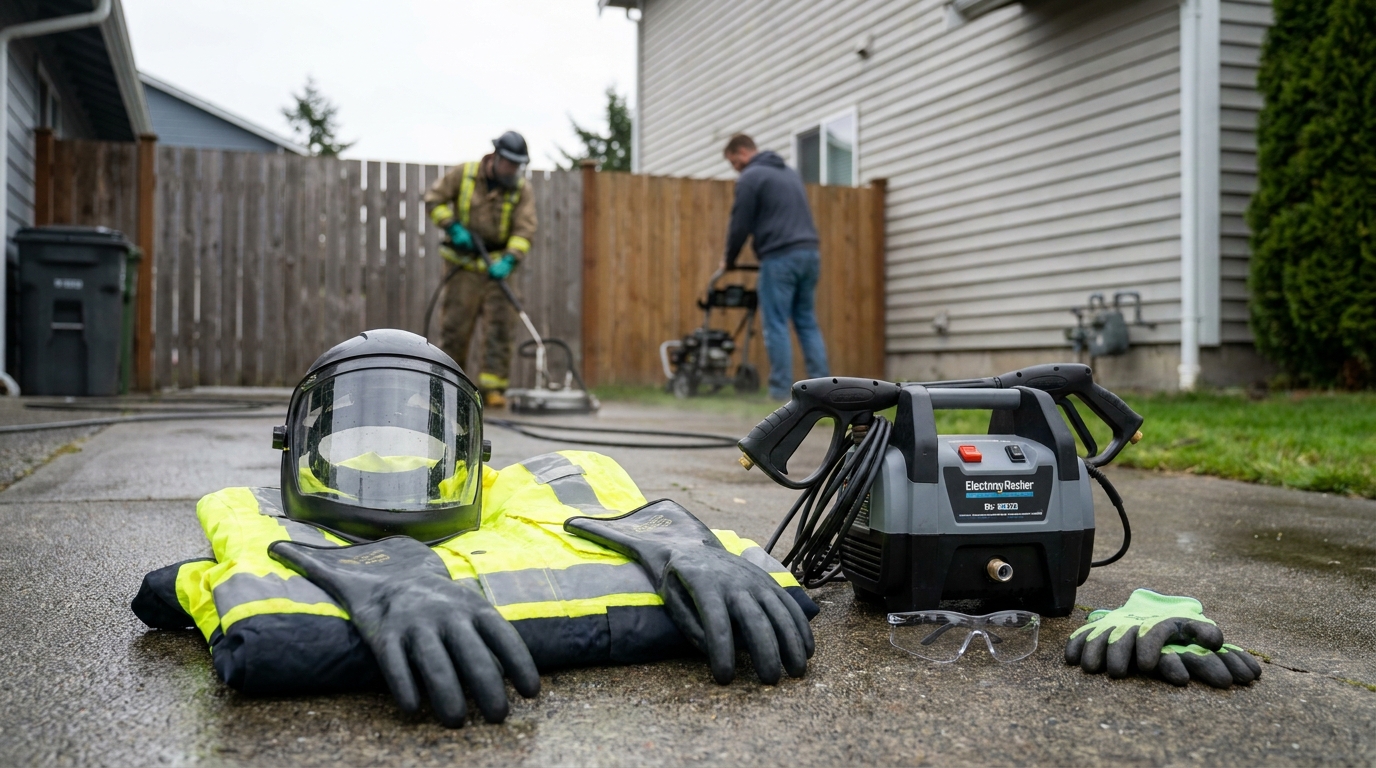
Professional crews don't just have better machines. They wear and use a layered protection system that addresses every realistic failure mode of the work.
Eye and Face Protection
ANSI Z87.1+ rated impact goggles or full face shields, not drugstore safety glasses. The +1 rating matters because it certifies protection against high-velocity impact, which is what you're dealing with when a pebble ricochets off vinyl siding at 3,000 PSI.
Cut and Injection Resistant Footwear
Professional crews wear waterproof boots with composite toes, puncture-resistant midsoles, and aggressive slip-rated outsoles — typically rated for wet, oily, and mossy surfaces. This is non-negotiable on Everett's algae-coated walkways and rain-slick roofs.
Chemical-Resistant Gloves and Sleeves
Soft washing — the lower-pressure technique used for most Everett roofs and siding — relies on sodium hypochlorite solutions and surfactants. Standard work gloves dissolve. Professional crews use nitrile or neoprene gauntlets that protect from both chemical exposure and high-pressure spray contact.
Hearing and Respiratory Protection
Gas-powered units routinely exceed OSHA's 85 dB action level. Professional crews wear rated ear protection. They also use N95 or P100 respirators when blasting moss, lichen, and algae, because aerosolized biological matter is one of the most underappreciated hazards in pressure cleaning.
Fall Protection Systems
For roof work, professionals use harnesses, anchor points, and rope grabs that comply with Washington State Department of Labor & Industries fall protection requirements. Washington enforces some of the strictest fall protection standards in the country — any work above 10 feet on a residential roof legally requires a compliant system. A homeowner on a ladder with a wand has none of this.
GFCI Protection and Electrical Safety Gear
Professional setups include ground-fault circuit interrupters on every electrical connection, insulated wand extensions for working near service drops, and clear protocols for the overhead lines common in older Everett neighborhoods like Delta and Pinehurst-Beverly Park.
Professional vs DIY Equipment: The Real-World Comparison
Cost
A weekend rental runs $80–$120. Add basic gear and you're at $150. A full professional safety kit — boots, suit, respirator, harness system, rated eyewear, hearing protection — costs $800 to $2,000 and requires training to use correctly.
Risk Profile
The CDC's emergency department data consistently lists pressure washer injuries among the more common power-tool injuries treated annually. Most aren't catastrophic. But the ones that are — eye loss, injection injuries, falls from height — are life-altering. Professional gear is engineered specifically to prevent these outcomes.
Surface Damage
Safety equipment is only half the equation. The other half is knowing what pressure and what chemistry to use on what surface. Cedar shake, composite siding, painted trim, concrete pavers, and asphalt shingles each demand a different approach. The wrong technique strips paint, etches concrete, voids roofing warranties, and forces water behind siding where it rots framing — particularly damaging in Everett's wet climate where trapped moisture doesn't dry out.
When DIY Makes Sense — and When It Doesn't
Reasonable DIY jobs: a small concrete patio at ground level, a fence panel, outdoor furniture, a driveway with no slope hazards. Use rated eyewear, closed boots, and stay off ladders.
Jobs to hand off:
- Any roof, period — Washington fall protection rules alone make this impractical for homeowners
- Multi-story siding
- Surfaces with heavy moss, lichen, or black algae requiring soft washing chemistry
- Anything near electrical service drops
- Cedar shake, stained wood, or anything where surface damage means costly repair
Frequently Asked Questions
Is pressure washing regulated in Everett?
Wastewater discharge is. Runoff containing detergents, oils, or chemicals cannot legally enter storm drains under City of Everett and Washington Department of Ecology rules. Professional crews capture and dispose of wastewater appropriately; homeowners often don't realize the rule exists.
What's the most overlooked piece of safety gear?
Respiratory protection. Aerosolized moss and mold spores are a real exposure, especially during Everett's damp spring months when biological growth is at its peak.
Can I rent professional-grade safety equipment?
Some rental yards offer eye and ear protection. Fall arrest systems, chemical-rated suits, and respirators are typically not available for rent and require training to use correctly.
When is the best time to schedule pressure washing in Everett?
Late spring through early fall, after the heaviest rains pass and before fall leaf accumulation. Booking before May fills up quickly as homeowners prep for summer.
The Bottom Line
Pressure washing looks simple from the driveway. The reality is that the equipment, chemistry, fall protection, and runoff management that separate a clean job from a damaged home — or an injury — represent real expertise, not just better tools.
Homeowners in Everett who'd rather not invest in a $2,000 safety kit and a weekend learning curve can reach Velocity Cleaning Services at https://velocitycleaningsystems.com/ for a free estimate on roof, siding, and exterior surface cleaning handled with professional equipment and Washington-compliant safety protocols.
"