Pressure Cleaning in Bellevue: Driveway and Sidewalk Restoration Guide
Pressure Cleaning in Bellevue: Driveway and Sidewalk Restoration Guide
Bellevue's wet climate does a number on concrete. If your driveway looks like a moss farm or your sidewalk has turned a shade of green, you're not imagining it — the Pacific Northwest's humidity and rainfall create near-perfect conditions for algae, mold, and biological buildup to take hold fast. Pressure cleaning is one of the most effective ways to reverse that damage and restore surfaces to something close to their original condition.
This guide walks through what pressure cleaning actually accomplishes on driveways and sidewalks, how the process works, what affects pricing in Bellevue, and how to tell whether a surface needs a professional service or a DIY rinse.
Why Bellevue Driveways and Sidewalks Degrade So Quickly
Bellevue averages around 140 rainy days per year. That sustained moisture, combined with shade from mature trees common in residential neighborhoods, means concrete and pavers stay damp long enough for biological growth to establish and spread.
The main culprits are:
- Algae and moss: Thrives on moisture and organic debris. Creates a green or black surface film that's slippery and visually unappealing.
- Efflorescence: White, chalky deposits that form when water carries mineral salts to the surface of concrete. Common after wet winters.
- Oil and automotive fluid stains: Penetrate porous concrete quickly and resist standard cleaning if left untreated.
- Tannin staining: Brown or black streaks from fallen leaves and tree debris — especially prevalent under deciduous trees.
- Dirt compaction: Fine particles work into surface texture over time, making concrete look permanently discolored even when it isn't.
Standard hosing moves loose debris but doesn't address embedded stains or biological growth at the root level. That's where pressure cleaning delivers results a garden hose simply can't.
What Pressure Cleaning Actually Does
Pressure cleaning — also called power washing — uses high-pressure water delivery, typically between 1,500 and 4,000 PSI depending on the surface, to dislodge and remove contaminants from concrete, pavers, brick, and similar hard surfaces.
On driveways and sidewalks, the process generally involves:
- Pre-treatment: Applying a detergent or biodegradable cleaning agent to loosen biological growth, oil, and stains before pressure is applied.
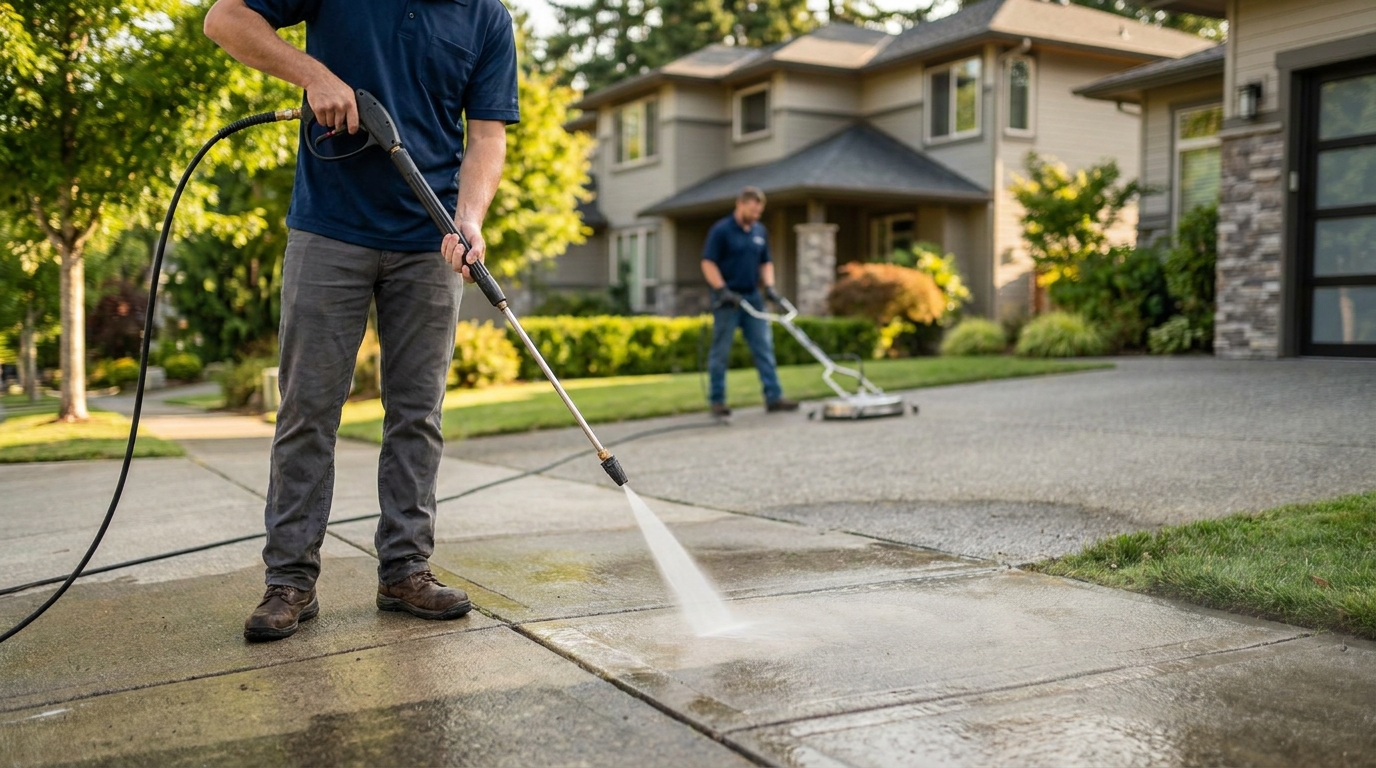
- Surface washing: Using a rotary surface cleaner attachment (rather than a wand alone) to deliver consistent pressure across the full surface area without streaking.
- Spot treatment: Targeting persistent stains — particularly oil, rust, or heavy moss — with targeted pressure or additional cleaning agents.
- Rinse and post-treatment: Clearing residue and, in some cases, applying a post-treatment to inhibit future biological regrowth.
Done correctly, pressure cleaning removes years of accumulation without damaging the surface underneath. Done incorrectly — wrong PSI for the material, wand too close to the surface, or no pre-treatment — it can etch concrete or drive contaminants deeper into porous material.
Driveway vs. Sidewalk: Key Differences in Approach
Driveways
Driveways typically receive heavier contamination from vehicle traffic, oil drips, and tire residue. They're also larger surface areas, often 400 to 800 square feet in residential Bellevue properties, and may include expansion joints where weeds take hold.
Concrete driveways generally tolerate higher pressure than pavers or stamped concrete. Paver driveways require lower PSI and careful attention to avoid dislodging joint sand.
Sidewalks and Walkways
Public-facing sidewalks in Bellevue are often the first surface visitors or passersby notice. They accumulate foot traffic grime, tannin staining from tree cover, and moss — particularly in shaded sections.
Sidewalk concrete is typically thinner than driveway slabs and may be older, which means surface assessment before cleaning matters. Deteriorating concrete with surface spalling can be worsened by high-pressure cleaning if the approach isn't adjusted.
Pressure Cleaning Costs in Bellevue (2026 Reference)
As of 2026, professional pressure cleaning in Bellevue runs in the following general ranges for residential surfaces:
- Standard concrete driveway (up to 600 sq ft): $150–$300
- Paver driveway: $200–$400, depending on size and condition
- Sidewalk or walkway (per linear section): $75–$175
- Combined driveway and front walkway package: $250–$450
Several variables affect the final figure: the severity of staining, whether pre-treatment chemicals are needed, surface type, access limitations, and whether post-treatment sealing is included. Get an on-site assessment before committing to a quote — surface-specific pricing is more accurate than per-square-foot estimates alone.
DIY vs. Professional Pressure Cleaning in Bellevue
Rental pressure washers are widely available in Bellevue, and for light maintenance cleaning, they can handle the job. But there are clear situations where professional equipment and technique produce materially better outcomes.
DIY makes sense when:
- The surface has light surface dirt and minimal biological growth
- There are no oil stains or embedded contaminants
- You're comfortable calibrating PSI for your specific surface material
- The surface is in good structural condition
Professional cleaning makes sense when:
- Moss, algae, or black mold has established itself below the surface layer
- Oil or automotive fluid stains are present
- The surface is older, has visible cracking, or shows signs of previous water damage
- You want consistent results across a large area without streaking
- You're preparing the surface for sealing or resurfacing
The risk with DIY on compromised surfaces isn't the cleaning itself — it's the pressure calibration. Consumer-grade equipment often runs at a fixed PSI that can be too high for older concrete or too low to actually remove embedded moss. Professional services use commercial-grade equipment with adjustable settings and rotary surface cleaners that distribute pressure evenly.
Velocity Cleaning Services works specifically with Bellevue residential properties and adjusts approach by surface type — which matters more than people expect, particularly for properties with mixed concrete and paver sections.
How Often Should Bellevue Driveways and Sidewalks Be Pressure Cleaned?
Given Bellevue's rainfall patterns, most concrete driveways benefit from professional pressure cleaning every one to two years. Properties with heavy tree canopy or north-facing surfaces that stay damp longer may need annual cleaning to stay ahead of moss and algae buildup.
Sidewalks in high-foot-traffic areas, or those adjacent to landscaping, tend to accumulate debris faster and often warrant annual cleaning.
Sealing after cleaning significantly extends the interval. A properly applied concrete sealer after pressure washing can reduce biological regrowth and surface staining for two to three years, depending on foot and vehicle traffic.
Frequently Asked Questions: Pressure Cleaning in Bellevue
Will pressure cleaning damage my driveway?
Not if the PSI and technique match the surface. Standard concrete driveways handle 2,500–3,000 PSI without issue. Pavers, stamped concrete, and older or cracked surfaces require lower pressure and a modified approach. Reputable providers assess the surface before starting.
Can pressure cleaning remove oil stains from concrete?
It can reduce them significantly, but full removal depends on how long the stain has been there and how deep it has penetrated. Fresh oil stains (under six months) respond well to pre-treatment followed by pressure cleaning. Older, deeply set stains may require multiple treatments or specialized degreasers.
Is pressure cleaning environmentally safe in Bellevue?
Most professional services use biodegradable detergents, and Washington State has specific runoff guidelines that apply to commercial cleaning operations. Ask your provider how they handle runoff, particularly if your driveway drains toward landscaping or a storm drain.
How long does a driveway stay clean after pressure washing?
In Bellevue's climate, unsealed concrete typically shows visible regrowth within 12–18 months. Sealing after cleaning extends that significantly. The best outcomes come from cleaning followed by sealing — not cleaning alone.
Do I need to be home during the service?
For exterior surface cleaning, most providers only need access to a water source and the surface itself. Confirm logistics with your service provider during the estimate call.
Preparing Your Property Before Pressure Cleaning
A few straightforward steps before a pressure cleaning appointment improve results and protect your property:
- Clear vehicles, planters, and movable obstacles from the driveway
- Sweep loose debris to reduce the volume of material the pressure wash has to move
- Close windows and doors adjacent to the work area
- Let your provider know about any surface damage — cracks, loose pavers, or areas of concern — before work begins
- If you have landscaping close to the driveway, mention it; professionals can adjust rinse direction to avoid oversaturating plant beds
Conclusion
Bellevue's climate makes surface maintenance a genuine annual consideration, not just a cosmetic one. Moss and algae on driveways and sidewalks aren't just unattractive — they create slip hazards and, if left long enough, can accelerate surface degradation. Pressure cleaning addresses both the visual result and the underlying buildup in a single service.
Whether you're dealing with years of tannin staining under a maple canopy, oil spots from a leaking vehicle, or moss that's started to lift the edges of your paver walkway, the approach matters as much as the equipment. Matching pressure to surface type, using proper pre-treatment, and finishing with a post-treatment or sealer are what separate a temporary cosmetic fix from a result that holds.
Homeowners in Bellevue who want this handled professionally can reach Velocity Cleaning Services at velocitycleaningsystems.com for a free estimate — they work specifically with residential driveways and sidewalks in the area and can assess your surface before recommending an approach.