How to Remove Black Streaks and Algae from Roofs in Bellevue
If you've looked up at your roof lately and noticed dark streaks running down the north-facing slope, you're not imagining things — and you're not alone. Across Bellevue, from Bridle Trails to Somerset to the older ramblers in Lake Hills, homeowners are watching their roofs turn from charcoal gray to streaky black. The culprit isn't dirt, and it isn't shingle failure. It's algae, and the wet Pacific Northwest climate is essentially a year-round incubator for it.
Here's what those streaks actually are, why Bellevue roofs are especially prone to them, and how to get them off without wrecking your shingles in the process.
What Causes Black Stains on Roofs?
The black streaks staining roofs across the Eastside are caused by a hardy, airborne cyanobacteria called Gloeocapsa magma. It's often called "roof algae," though technically it's bacterial. It feeds on the limestone filler in asphalt shingles, holds moisture against the roof surface, and produces a dark pigment as a UV defense — which is exactly the streaking you see.
Three conditions accelerate growth, and Bellevue offers all three:
- Persistent moisture. Bellevue averages roughly 165 rainy days a year, and shaded north-facing roof planes can stay damp for weeks at a time between October and May.
- Tree canopy. Neighborhoods like Bridle Trails, Woodridge, and Cougar Mountain are heavily shaded by Douglas fir and western red cedar. Needle debris traps moisture and feeds the bacteria.
- Mild temperatures. Algae thrives between 40°F and 80°F, which describes most of the year on the Eastside.
Left alone, the streaks get worse each year. Worse, where there's algae, moss and lichen usually follow — and moss is the actual structural threat. It lifts shingle edges, holds water against the decking, and shortens roof life by years.
How to Remove Algae from a Roof (Without Damaging It)
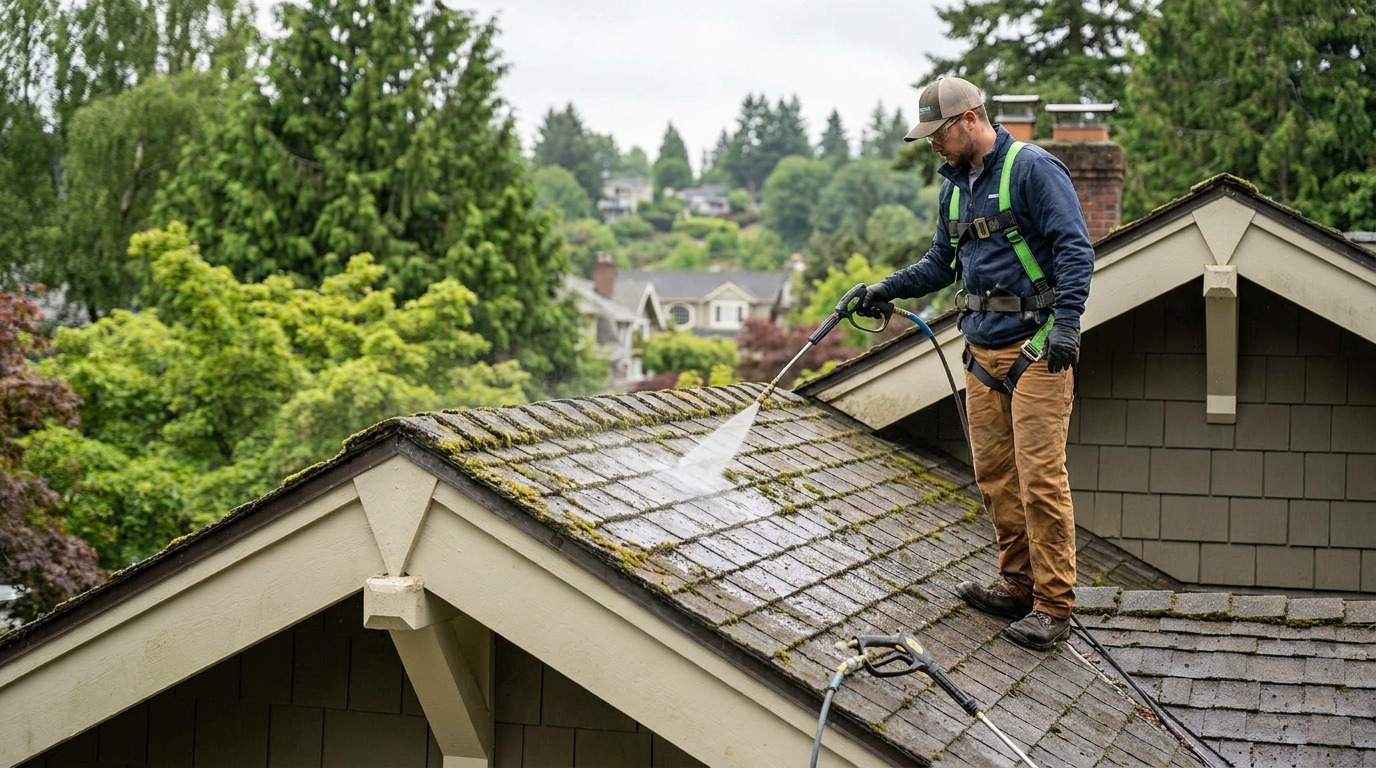
The single most important thing to know: do not pressure wash an asphalt shingle roof. High pressure strips the protective granules off the shingle surface, exposes the asphalt mat, and can void your manufacturer warranty. A roof that looked dirty before pressure washing often looks worse — and ages dramatically faster — afterward.
The industry-standard method for asphalt shingles is soft washing: a low-pressure application of a cleaning solution that kills the algae, moss, and lichen at the root, followed by a gentle rinse. This is the method recommended by the Asphalt Roofing Manufacturers Association (ARMA), and it's what reputable roof cleaners like Velocity Cleaning Systems use on Bellevue homes.
Step 1: Identify Your Roof Material
Asphalt composition shingles are by far the most common roof in Bellevue, but you'll also find cedar shake (common in older Newport Hills and Clyde Hill homes), concrete tile, and metal. Each material has its own protocol. Cedar in particular needs a gentler solution and a contractor who understands how to clean it without raising the grain.
Step 2: Use the Right Cleaning Solution
The ARMA-approved cleaning approach uses a diluted sodium hypochlorite solution combined with a surfactant. Applied correctly, it kills the algae and moss without scrubbing or scraping. Applied incorrectly — too strong, no rinse, no plant protection — it can scorch landscaping, stain siding, and damage gutters.
This is the part most DIY attempts get wrong. Big-box "roof cleaner" sprays from the hose attachment rarely have enough dwell time or concentration to actually kill the bacteria. The streaks fade for a few months, then come right back.
Step 3: Rinse Gently and Protect Surroundings
A proper soft wash includes pre-wetting nearby plants, covering sensitive landscaping, and using a low-pressure rinse (under 500 PSI — about the pressure of a garden hose) to clear residue. Anything more aggressive damages the shingles you're trying to save.
Step 4: Address Moss Separately
If moss has already taken hold — common on roofs that haven't been cleaned in 5+ years — it usually needs a separate treatment. Killing moss chemically and letting it dry out and fall away over several weeks is far safer than scraping or power washing it off. Scraping breaks shingle seal strips and lifts granules.
Why DIY Roof Cleaning Often Backfires in Bellevue
Bellevue roofs present specific challenges that make DIY risky:
- Steep pitches. Many homes in Somerset, West Bellevue, and the Points communities have 8/12 or steeper pitches that are genuinely dangerous to walk.
- Wet, mossy surfaces. Even a low-slope roof in Bellevue is slick from October through June.
- Stormwater rules. The City of Bellevue's stormwater code restricts what can enter storm drains, and roof cleaning runoff containing sodium hypochlorite needs to be managed properly. Professional cleaners handle containment; homeowners often don't realize it's required.
- Landscaping investment. Eastside homes typically have mature, expensive landscaping directly under the eaves. A single bleach overspray can kill a row of rhododendrons.
Falls from roofs are one of the most common serious home-maintenance injuries. Hiring a licensed, insured roof cleaning company is almost always the right call on a Bellevue home.
The Best Way to Clean a Roof Without Damaging It
Here's what a professional soft wash on a typical Bellevue asphalt roof looks like:
- Inspection and identification of algae, moss, lichen, and any damaged shingles.
- Pre-treatment of landscaping with water to dilute any drift.
- Application of a soft-wash cleaning solution at low pressure.
- Dwell time (usually 15–30 minutes) to kill biological growth at the root.
- Low-pressure rinse and runoff management.
- Optional follow-up application of a zinc or copper-based inhibitor to slow regrowth.
Done correctly, the result lasts 4–7 years before another cleaning is needed — much longer than a pressure-wash job, which often needs to be repeated within 18 months and damages the roof every time.
When to Schedule a Roof Cleaning in Bellevue
The ideal window for roof cleaning on the Eastside is late spring through early fall — roughly May through September — when the roof is dry enough for the cleaning solution to work properly and the weather is stable. Booking ahead of the fall rainy season means your roof goes into winter clean, with no moss or algae trapping moisture against the shingles.
If you're seeing heavy moss buildup now, don't wait for perfect weather. Moss does the most structural damage during the wet months, and treatment can begin any time the roof is accessible.
Frequently Asked Questions
How much does professional roof cleaning cost in Bellevue?
Pricing varies by roof size, pitch, material, and condition, but most single-family Bellevue homes fall in a range that's far less than the cost of premature roof replacement. Get a written estimate that specifies soft wash (not pressure wash) and includes runoff management.
Will the black streaks come back?
Eventually, yes — Bellevue's climate guarantees it. But a proper soft wash with a zinc or copper treatment typically holds for 4–7 years. Installing zinc or copper strips along the ridge can extend that further.
Is roof cleaning safe for my gutters and landscaping?When done by a contractor who pre-wets plants, covers sensitive areas, and rinses thoroughly, yes. This is one of the main reasons to hire a professional rather than DIY.Does homeowners insurance cover algae damage?
Generally no — insurers consider algae a maintenance issue. That's why regular cleaning is the protective move.
Getting Help in Bellevue
Black streaks and moss aren't just cosmetic. On a Bellevue roof, they're a slow-moving maintenance problem that gets more expensive the longer it's ignored. The fix is well understood: soft wash, correct solution, proper containment, and ideally a follow-up treatment to slow regrowth.
Homeowners in Bellevue who want this handled professionally can reach Velocity Cleaning Systems at https://velocitycleaningsystems.com/ for a free estimate. They specialize in soft-wash roof cleaning on Eastside homes and can assess whether your roof needs a full treatment, moss-only work, or just preventive maintenance before the next rainy season.