
How Often Should You Clean Windows on Two-Story Homes in Bellevue?
If you own a two-story home in Bellevue, you've probably stood in your driveway, looked up at your second-floor windows, and wondered when they started looking like frosted glass. Between Pacific Northwest drizzle, pollen drifts off the Cascades, and the fine grit that settles out of the air near I-405 and I-90, upper-floor windows in this market get dirty faster than most homeowners expect.
So how often should you actually clean them? The honest answer is twice a year for most Bellevue homes — but the longer answer is more useful, because the right cadence depends on your microclimate, your tree cover, and whether you're bundling window work with the rest of your exterior maintenance.
The Baseline: Twice a Year for Most Two-Story Bellevue Homes
For a typical two-story home in neighborhoods like Somerset, Bridle Trails, Newport Hills, or West Bellevue, a professional cleaning twice per year handles the bulk of what the climate throws at your glass.
The two windows that matter most:
- Late spring (April–June): Cleans off the winter's accumulation of rain spotting, mineral deposits, and the heavy pollen load that coats glass as cottonwoods, alders, and Douglas firs release through May.
- Early fall (September–October): Clears summer dust and prepares the glass for the long wet season. Clean windows going into October mean you actually get light through them during Bellevue's darkest months.
Two cleanings a year is the sweet spot for cost, appearance, and glass longevity. It's also the cadence experts at Velocity Cleaning Systems recommend for most two-story homes in the area.
When You Should Bump Up to Three or Four Times a Year
Some Bellevue properties accumulate grime faster, and a twice-yearly schedule leaves them looking neglected for months at a stretch. Consider a quarterly cadence if:
- You're under heavy tree cover. Homes in Bridle Trails, Woodridge, and parts of Lakemont sit beneath mature evergreens. Sap, needle debris, and bird activity coat second-floor glass quickly.
- You're close to Lake Washington or Lake Sammamish. Waterfront and near-water homes deal with mineral spray, lake-borne pollen, and more aggressive algae growth on north-facing windows.
- You have hard water from sprinklers hitting the glass. Bellevue's water is relatively soft compared to other parts of the country, but irrigation overspray on ground-floor windows still leaves spotting that hardens within weeks.
- You're near a construction zone. With ongoing density projects across the Spring District, Wilburton, and Bel-Red corridor, nearby homes pick up surprising amounts of fine construction dust.
Why Two-Story Homes Need a Different Approach Than Single-Story
Second-floor windows aren't just harder to reach — they collect a different mix of grime than ground-level glass.
Upper windows catch more wind-driven rain, which means more mineral spotting. They sit closer to roofline runoff, so they get streaked by anything washing off your shingles or gutters. And because they're rarely cleaned by homeowners (ladder work above eight feet is where most DIY injuries happen), they tend to develop baked-on residue that requires more than a squeegee and soap.
This is also why bundling matters. The same rainwater that streaks your second-story windows is overflowing from clogged gutters, washing across your siding, and dripping down onto your trim. Cleaning the glass without addressing the system above it just resets the clock on the next round of streaks.
How Often Should Gutters Be Cleaned on a Two-Story Home in Bellevue?
This is the most common follow-up question, and it matters for your windows. Clogged gutters overflow and dump dirty water directly across upper-story glass.
For most two-story Bellevue homes, gutters should be cleaned at least twice a year: once in late fall after the bulk of leaf drop (typically mid-November), and once in spring after seed pods, blossoms, and fir needles have finished falling. Homes with significant tree coverage — especially big-leaf maples or cedars overhanging the roofline — often need a third cleaning in midwinter to prevent ice-dam-style backups during cold snaps.
If you're already scheduling window work, having the gutters cleared in the same visit is the efficient move. It also gives the crew a chance to flag roof issues you'd otherwise miss from the ground.
Pairing Window Cleaning With Broader Exterior Maintenance
Most homeowners who call about windows end up needing more than glass work, especially after a long wet stretch. The exterior surfaces that benefit from coordinated cleaning include:
- Roof moss treatment: Bellevue's damp, shaded roofs grow moss aggressively. Untreated, moss lifts shingles and shortens roof life. Most asphalt roofs here benefit from treatment every 2–3 years.
- House washing: Soft washing siding, soffits, and trim removes the green algae film that builds up on north and east elevations. Once a year is typical.
- Pressure washing for hardscape: Driveways, walkways, and patios collect moss and mildew through the wet season. An annual spring cleaning resets them.
- Gutter cleaning and brightening: Beyond clearing debris, gutter exteriors develop "tiger stripes" — oxidation streaks — that only specific cleaning agents remove.
House washing and exterior cleaning experts generally recommend addressing these on a coordinated annual or biannual schedule. It's cheaper than calling separate trades, and the results last longer when the whole envelope of the house gets attention at once.
What About Safety and Access on Two-Story Homes?
This is worth saying plainly: cleaning second-story windows from a ladder is genuinely dangerous, and it's the single biggest reason homeowners hire out this work. Bellevue's terrain doesn't help — many lots are sloped, and stable ladder placement on a hillside lot in Somerset or Cougar Mountain is not a casual undertaking.
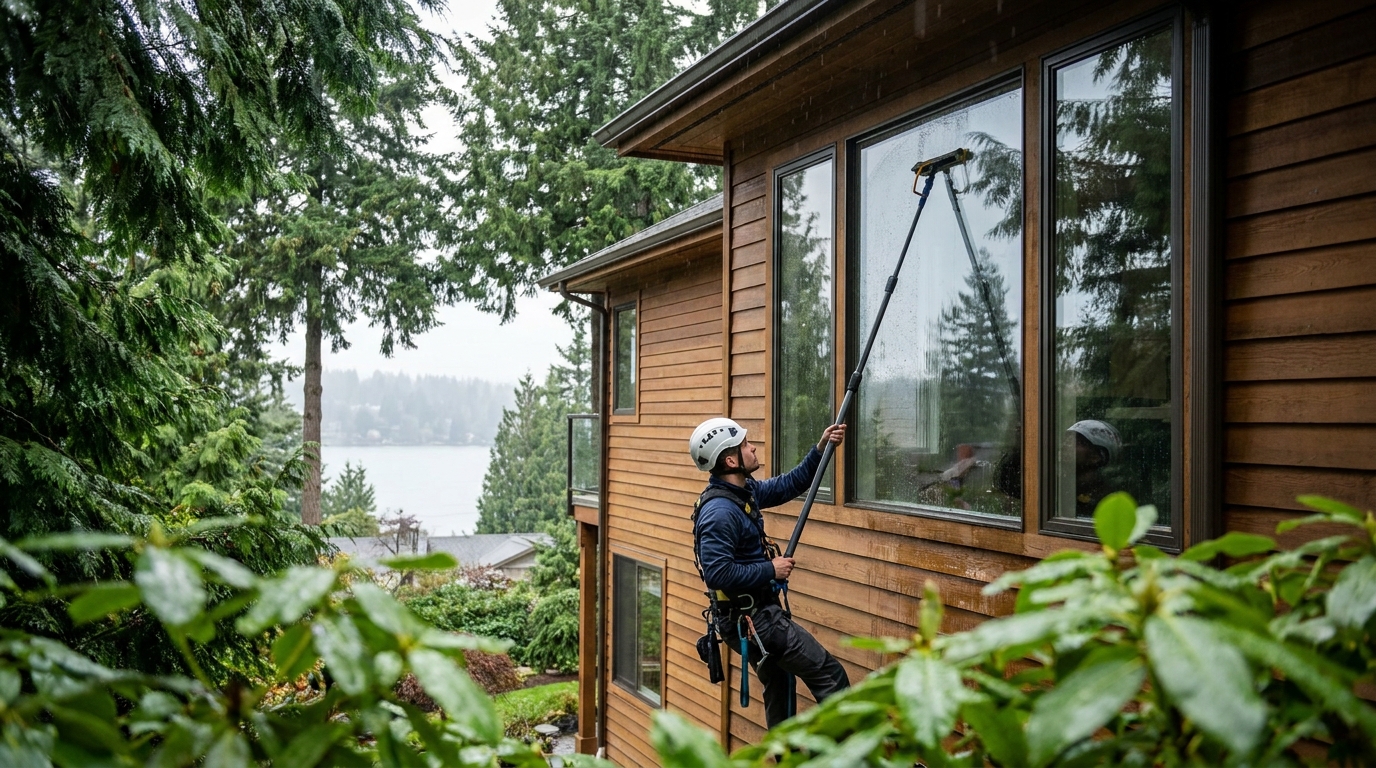
Professional crews use water-fed pole systems that clean upper windows from the ground using purified water, eliminating ladder risk for most second-story work and producing a streak-free finish that air-dries without spotting. For homes with dormers, skylights, or third-story gables, certified rope-access or lift equipment may be appropriate.
FAQs About Window Cleaning Frequency in Bellevue
Does rain clean my windows for me?
No. Rain in the Puget Sound region carries enough particulate that it deposits more dirt than it removes. The spotting you see on glass after a storm is mineral residue left behind as the water evaporates.
How long does a professional window cleaning last in Bellevue's climate?
Expect 4–6 months of clearly clean glass under normal conditions. Heavy pollen weeks in May and stretches of windy fall weather can shorten that window noticeably.
Should I clean windows before or after pressure washing the house?
After. House washing throws debris and detergent onto glass. The standard sequence is roof and gutters first, then house wash, then windows last.
Is interior window cleaning worth adding?
For two-story homes, yes — at least once a year. Interior glass collects cooking residue, dust, and pet nose prints that exterior cleaning alone won't address.
Putting It All Together
For most two-story homes in Bellevue, the maintenance rhythm that works is straightforward: windows twice a year, gutters twice a year, house washing annually, and roof treatment every couple of years. Adjust upward if you're under heavy tree cover or near the lakes, and time the spring round to follow pollen season rather than precede it.
Homeowners in Bellevue who want this handled professionally — or who'd rather not bundle ladder work into their weekend — can reach Velocity Cleaning Systems at https://velocitycleaningsystems.com/ for a free estimate on window cleaning, gutter service, and coordinated exterior maintenance.