Home Exterior Cleaning Signs You Can't Ignore
Most homeowners don't think about exterior cleaning until something is obviously, visibly wrong. But by the time a problem is impossible to ignore, it's often been quietly developing for months — sometimes years. The Pacific Northwest's relentless moisture, shade, and organic growth don't announce themselves loudly. They creep in slowly and hide in plain sight.
Your home is always sending signals. You just need to know what to look for.
Your Roof Has Dark Streaks or Green Patches
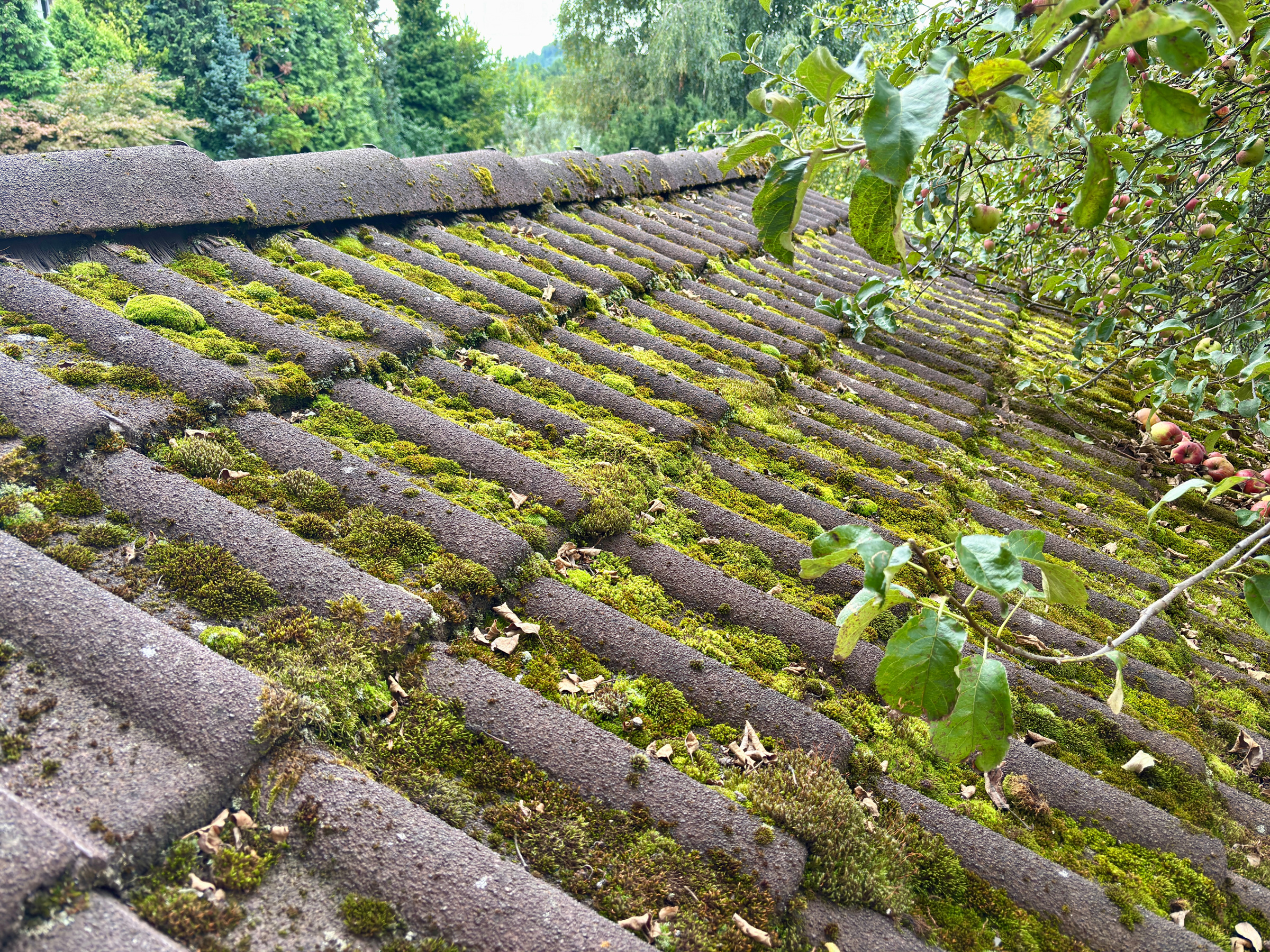
This is one of the most common and most ignored warning signs in the Pacific Northwest. Those dark brown or black streaks running down your shingles? That's algae. The fuzzy green patches taking hold near the edges or in shaded areas? That's moss. And the crusty, gray-green growth that almost looks like it belongs there? That's lichen — the most destructive of the three.
None of these are cosmetic issues. All three actively damage your roofing materials, trap moisture against your shingles, and dramatically shorten the life of your roof. If you can see any of them from the ground, the growth is already well established and needs professional attention immediately.
Your Gutters Are Overflowing or Sagging
If you notice water spilling over the sides of your gutters during rain rather than flowing through the downspouts, your gutters are clogged. In the PNW, gutters fill up fast with pine needles, leaves, moss, and organic debris — and a clogged gutter is far more than an inconvenience.
Overflowing water runs straight down your exterior walls and pools at your foundation. Over time this leads to fascia rot, basement moisture, and foundation damage that can cost tens of thousands of dollars to repair. If your gutters are pulling away from the roofline or visibly sagging, that's a sign the weight of built-up debris has been sitting far too long.
Your Siding Looks Dull, Stained, or Has Green Tinting
Your siding should look clean and consistent in color. If it's taken on a greenish tint, developed dark splotchy staining, or simply looks dull and worn despite being relatively new, moisture and organic growth have taken hold. Algae and mildew embed themselves into siding surfaces and begin breaking down the material underneath — leading to paint failure, warping, and eventually the need for full replacement.
This is especially common on the north-facing sides of homes and in areas where trees or shrubs are close to the exterior.
Your Driveway or Walkways Are Slippery
If you've found yourself instinctively slowing down on your own driveway or tiptoeing across your front walkway when it's wet, that's a serious warning sign. Moss and algae on concrete and pavers create an almost invisible but genuinely dangerous slipping hazard. Beyond safety, organic growth on hard surfaces breaks them down over time — causing surface erosion, cracking, and costly repairs.
If your driveway has gone from light gray to dark green or black, it's well past time for a professional pressure wash.
You Notice Black Spots or Streaking on Your Deck
A deck in the Pacific Northwest faces constant punishment. If your deck surface has developed black spots, dark streaking, or a slippery film — that's mold and mildew settling into the wood. Left unchecked, these organisms break down wood fibers from the inside, leading to soft spots, rot, splintering, and structural instability.
If your deck feels spongy underfoot in certain areas or the surface looks visibly discolored and weathered, it needs cleaning and resealing before the damage goes any deeper.
Your Energy Bills Have Quietly Gone Up
This one catches most homeowners completely off guard. If you have solar panels and your energy production has been gradually declining, dirty panels are very likely the culprit. Pollen, bird droppings, moss spores, and general grime build up on panel surfaces and block the sunlight your system depends on. Even a modest layer of buildup can meaningfully reduce efficiency.
Similarly, if your dryer is taking longer than usual to dry a normal load or feels unusually hot to the touch, a clogged dryer vent could be restricting airflow — wasting energy and creating a genuine fire hazard in your home.
You Can't Remember the Last Time It Was Cleaned
Sometimes the most honest warning sign is the simplest one. If you genuinely can't remember the last time your roof, gutters, siding, or driveway received any professional attention — or if the answer is "never" — then the need is already there, whether the visible signs have fully shown themselves yet or not.
In the Pacific Northwest, organic growth and moisture damage work on a timeline that outpaces most homeowners' awareness. By the time it's obvious, it's expensive. The safest assumption is that if it's been more than two years, it's time.
Don't Wait for the Damage to Make the Decision for You
The signs are rarely dramatic at first. A faint green tint here. A slightly slower dryer there. A patch of moss you keep meaning to deal with. But in the Pacific Northwest climate, small signs move fast — and what starts as a cleaning issue becomes a repair issue before most homeowners even realize it's happened.
At Velocity Cleaning Systems, we've spent over 25 years helping Pacific Northwest homeowners catch these warning signs early and act on them before they turn into costly damage. Our team knows exactly what to look for, and we bring the tools, expertise, and eco-friendly solutions to handle every exterior surface your home has.
If any of these signs sound familiar, don't wait. Contact Velocity Cleaning Systems today for a free assessment and let us take it from there.
Because the best time to clean your home was last year. The second best time is right now.