
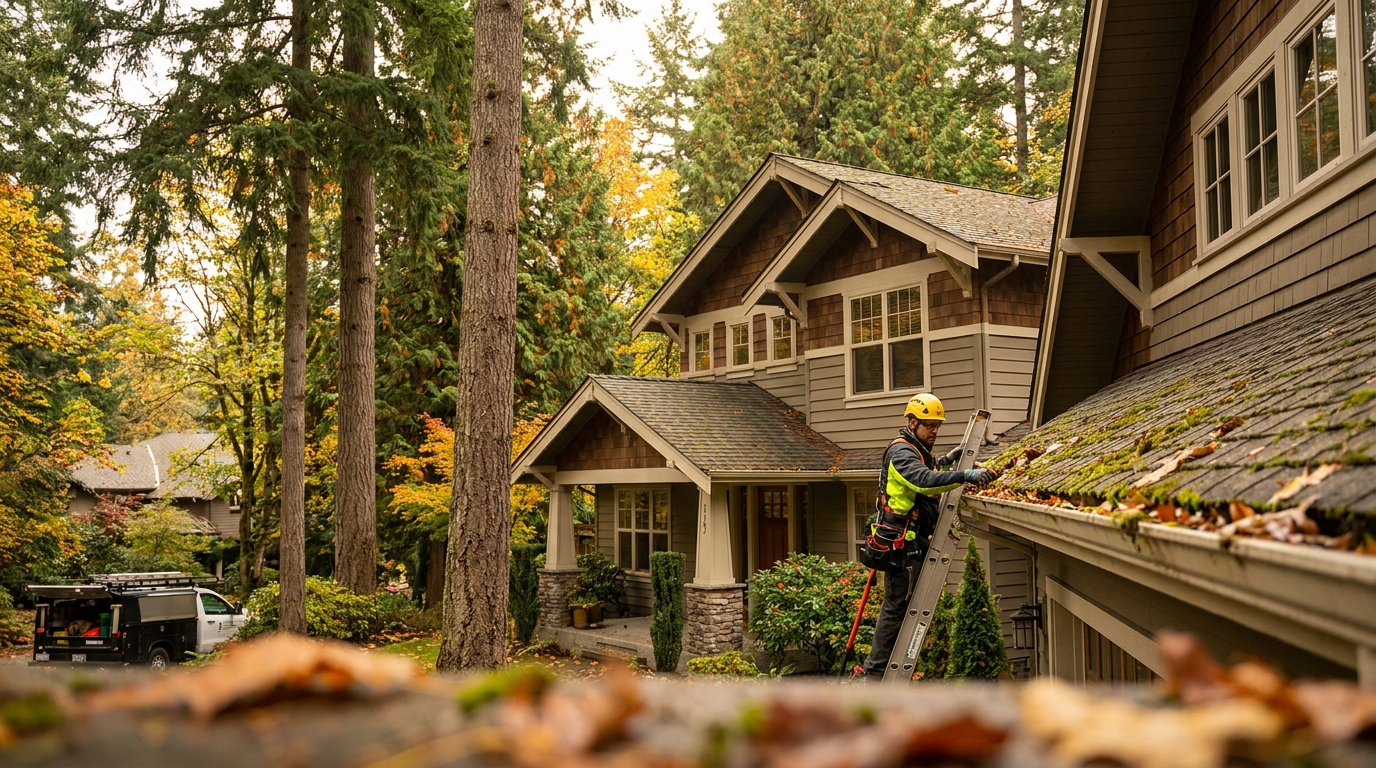
Gutter Cleaning in Bellevue: Tree-Heavy Neighborhoods That Need Twice-Yearly Service
Gutter Cleaning in Bellevue: Tree-Heavy Neighborhoods That Need Twice-Yearly Service
If you live in Bellevue and your gutters are surrounded by mature Douglas firs, big-leaf maples, or Western red cedars, a single annual cleaning probably isn't enough. The combination of heavy fall leaf drop and spring needle shed creates two distinct debris cycles — and ignoring either one puts your foundation, fascia, and landscaping at real risk.
This guide breaks down which Bellevue neighborhoods generate the most gutter debris, what happens when clogs go unaddressed, and how to build a cleaning schedule that actually matches your property's needs.
Why Bellevue's Tree Canopy Changes Everything
Bellevue isn't like other suburban markets. The city's tree preservation ordinances have kept a dense, mixed canopy intact across many of its older neighborhoods. That's great for aesthetics and air quality. It's hard on gutters.
Deciduous trees — particularly the big-leaf maples common throughout east Bellevue — shed enormous volumes of leaves in October and November. Those leaves mat down quickly, trapping moisture and blocking downspouts within days of a heavy windstorm.
Evergreen trees create a different problem. Douglas firs and cedars shed needles year-round, but spike significantly in late spring. Pine needles are particularly damaging: they slip through gutter guards, compress into dense plugs, and hold moisture against the gutter metal, accelerating corrosion.
The result is a two-season debris problem that most homeowners only clean once — usually in November, after the leaves fall. That leaves the spring needle flush completely unaddressed.
Bellevue Neighborhoods With the Highest Debris Loads
Not every Bellevue neighborhood carries the same risk. Canopy density, lot size, and tree species vary significantly across the city. These are the areas where twice-yearly gutter cleaning in Bellevue is practically non-negotiable.
Somerset
Somerset sits on the eastern ridge above I-405, with large lots and mature evergreen canopy throughout. The elevation means stronger winds, which accelerates needle and cone drop into gutters. Homes here frequently deal with moss buildup on top of debris accumulation — a combination that adds significant weight load to gutter systems.
Woodridge
Woodridge is one of Bellevue's most densely treed residential neighborhoods. The mix of deciduous and conifer species means debris arrives in waves from September through May. Homeowners in Woodridge who skip spring cleaning often discover standing water and overflow damage by early summer.
Bridle Trails
Named for its equestrian character, Bridle Trails is surrounded by Bridle Trails State Park. The park's western red cedars and big-leaf maples drop debris across adjacent properties throughout the year. Gutters on homes bordering the park can fill completely within four to six weeks of a cleaning during peak seasons.
Lakemont
Lakemont's hillside positioning and wooded lots create ideal conditions for debris accumulation. The neighborhood's steeper roof pitches funnel debris directly into gutters rather than allowing it to blow clear, which means clogs develop faster here than on flatter-roofed properties elsewhere in Bellevue WA.
Phantom Lake and Cougar
These adjacent neighborhoods near the Issaquah-Bellevue border are surrounded by second-growth forest and wetland buffers. Organic debris — leaves, moss, lichen, and decomposing needles — is a constant presence. Downspout blockages in these areas are common enough that many residents have moved to quarterly inspections rather than bi-annual service.
What Happens When Debris Removal Gets Delayed
Clogged gutters aren't just an inconvenience. In Bellevue's wet climate, the consequences of delayed debris removal follow a predictable escalation.
Overflow and fascia damage. When gutters can't drain, water spills over the front edge and saturates the fascia board behind the gutter. Fascia rot is one of the most common — and most expensive — secondary repairs that follows neglected gutter maintenance.
Foundation intrusion. Water pooling at the base of a home due to overflowing gutters is a direct path to basement moisture and crawlspace flooding. In Bellevue's high-rainfall winters, even a single overflow event during a storm can introduce enough water to create mold conditions beneath the structure.
Gutter weight failure. Wet, compacted debris is heavy. A single section of gutter filled with saturated leaves and needles can be surprisingly heavy — enough stress to pull fasteners loose and cause the gutter to separate from the fascia entirely.
Ice damming. Bellevue doesn't get heavy snow every winter, but freeze-thaw cycles are common. Debris-filled gutters trap standing water that freezes, expands, and forces water back under roofing material — one of the leading causes of interior ceiling damage in the Pacific Northwest.
Building the Right Cleaning Schedule for Your Neighborhood
The standard advice — clean your gutters once a year in fall — works for low-canopy properties in open suburban settings. It doesn't work for most of Bellevue.
A practical twice-yearly schedule for tree-heavy Bellevue properties looks like this:
- Late November or early December: Post-leaf-drop cleaning, after deciduous trees have finished shedding. This is the most critical service window for homes near big-leaf maples and alders.
- Late April or May: Post-needle-flush cleaning, after conifers have completed their spring shed cycle. This window is frequently skipped by homeowners who only think about gutters in fall.
For properties directly adjacent to Bridle Trails State Park, Cougar Mountain, or other dense woodland areas, adding a mid-summer inspection — even without a full cleaning — can catch early clogs before they develop into overflow events.
Velocity Cleaning Systems works with Bellevue homeowners to assess their specific tree load and recommend a schedule that reflects what's actually happening on their property — not a generic one-size-fits-all approach.
What Professional Gutter Cleaning Actually Involves
A thorough professional gutter cleaning isn't just scooping out leaves. A complete service should include:
- Manual debris removal from all gutter runs
- Downspout flushing and blockage clearing
- Visual inspection of gutter slope, seam integrity, and fastener condition
- Debris bagging and removal from the property
- A post-service report noting any areas of concern
The debris removal component matters more than homeowners often realize. Leaving wet debris on landscaping or hardscaping creates secondary problems — mold growth, staining, and drainage issues at ground level. Complete removal is part of a professional service, not an optional add-on.
Velocity Cleaning Systems holds a 4.9-star rating from 29 Google reviews as of August 2026. One customer wrote: "The cleaners were amazing. Went straight to work and did an efficient and superb job." Another noted that the crew "cleaned up all around my home and garage" and called the results "fantastic" — the kind of thoroughness that matters when wet debris needs to be fully cleared from your property.
Frequently Asked Questions About Gutter Cleaning in Bellevue
How often should I clean my gutters in Bellevue WA?
Most Bellevue homeowners with mature tree canopy on or adjacent to their property should plan for at least two cleanings per year — once in late fall after leaf drop, and once in late spring after the conifer needle flush. Properties near parks or heavily wooded areas may benefit from a third inspection mid-summer.
What's the best time of year to schedule gutter cleaning in Bellevue?
The two most important windows are late November through early December (after deciduous trees have fully shed) and late April through May (after spring needle drop from conifers). Scheduling in advance of these windows helps avoid the backlog that typically develops during peak cleaning season.
Are gutter guards worth it in Bellevue?
Gutter guards reduce cleaning frequency for some homeowners, but they're not maintenance-free in Bellevue's tree-heavy environment. Fine debris — pine needles, seeds, and decomposed organic matter — passes through or accumulates on top of most guard systems. Guards can extend the interval between cleanings, but they don't eliminate the need for professional service.
How much does gutter cleaning cost in Bellevue?
Professional gutter cleaning in Bellevue varies in cost depending on linear footage, roof pitch, and debris load. Properties with significant tree canopy, multiple stories, or extended gutter runs generally fall toward the higher end of that range. Getting a site-specific estimate is the most accurate way to understand your cost.
What happens if I don't clean my gutters in fall?
In Bellevue's climate, uncleaned fall debris traps moisture through the wet winter season, accelerates moss and mold growth inside the gutter channel, and significantly increases the risk of overflow damage during heavy rain events. Fascia rot and foundation moisture intrusion are the two most common — and costly — results.
Can I combine gutter cleaning with other exterior services to save time?
Yes. Scheduling gutter cleaning alongside roof moss treatment, window cleaning, or deck cleaning on the same visit is efficient and practical. Velocity Cleaning Systems offers multiple exterior cleaning services, so Bellevue homeowners can address roof debris, gutter blockages, and surface cleaning in a single appointment — reducing the number of service days needed each year.
How do I know if my gutters are already clogged heading into fall?
Common signs include water spilling over the gutter edge during rain, visible plant growth or moss on the gutter surface, sagging gutter sections, and staining on the fascia or siding directly below the gutters. If any of these are present before fall leaf drop begins, scheduling a cleaning before peak season is the right move — debris load will only increase.
Conclusion
Bellevue's tree canopy is one of the city's defining features. It also means that gutter maintenance here requires a more deliberate approach than most Pacific Northwest markets. If your home sits in Somerset, Woodridge, Bridle Trails, Lakemont, or near any of the city's wooded corridors, twice-yearly service isn't overcautious — it's the baseline for protecting your investment.
The cost of proactive debris removal is a fraction of what fascia replacement, foundation repair, or gutter rehang work runs in today's market. Building that schedule now prevents the larger expenses later.
Bellevue homeowners who want this handled professionally can contact Velocity Cleaning Systems at velocitycleaningsystems.com or call (425) 575-9275 for a free estimate — they assess tree load, debris accumulation, and cleaning frequency based on what's actually on your property.